Switzerland
Swiss Parliament Approves Easing of Weapons Export Regulations
In a significant policy shift, both chambers of the Swiss parliament have voted to relax criteria for the export and re-export of war materiel. The move, which allows the government to deviate from standard rules in exceptional circumstances, has sparked debate about Switzerland's neutrality and its role in global conflicts.
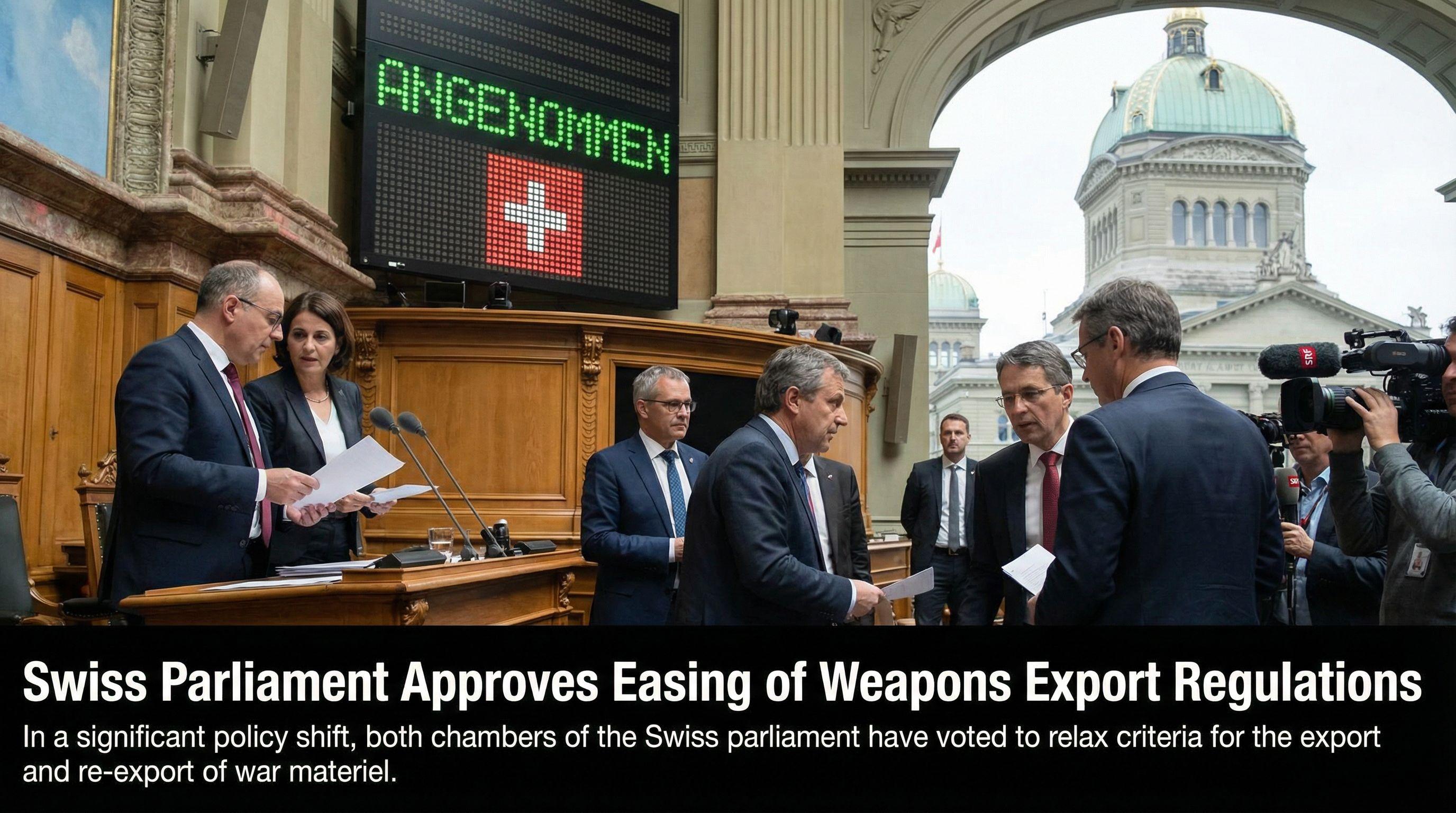
Swiss Parliament Greenlights Easing of Arms Export Rules
In a landmark decision, both chambers of the Swiss parliament have voted to relax the nation's stringent criteria for the export and re-export of war materiel. This significant policy shift grants the government the authority to deviate from standard rules in 'exceptional circumstances,' sparking a nationwide debate over Switzerland's long-standing policy of neutrality and its role in international affairs.
Details of the Policy Shift
The approved reform introduces a crucial derogation clause into the War Materiel Act. Under current law, arms exports are strictly forbidden to countries involved in an armed conflict or those that commit serious human rights violations. The new amendment, however, allows the Federal Council (the Swiss government) to authorize exports for a limited time if it serves Switzerland's foreign or security policy interests in exceptional situations. This provides a new layer of flexibility that was previously non-existent.
The Parliamentary Vote and Process
The proposal, which originated from a parliamentary request, was approved by the House of Representatives in a 120 to 63 vote, following an earlier endorsement from the Senate. This indicates broad support within the legislature for adapting to the current global security environment. Despite the approval from both chambers, the House of Representatives introduced several changes to the draft, meaning the dossier will now return to the Senate for a final round of deliberations before it can be enacted into law.
The Neutrality Question
The decision has ignited a fierce debate centered on the core of Swiss identity: its neutrality. Critics argue that allowing arms to flow, even indirectly, to conflict zones undermines the country's humanitarian traditions. However, proponents, including Economic Minister Guy Parmelin, have offered assurances. Parmelin stated to lawmakers that 'the amendments did not call into question the law of neutrality' and promised that 'interests will be weighed up before each authorisation,' suggesting a cautious, case-by-case approach.
Geopolitical and Economic Context
The push for this reform is largely a reaction to the 'current geopolitical situation in Europe and around the world.' The shifting security landscape has placed Switzerland in a difficult position, with its strict neutrality laws seen by some as a hindrance to supporting partner democracies. Furthermore, the Swiss defence industry has faced challenges, and this move is also seen as a way to bolster the sector's competitiveness and its ability to participate in European defence cooperation.