Travel
Zurich Airport to Scrap Liquid Restrictions With New 3D Scanners
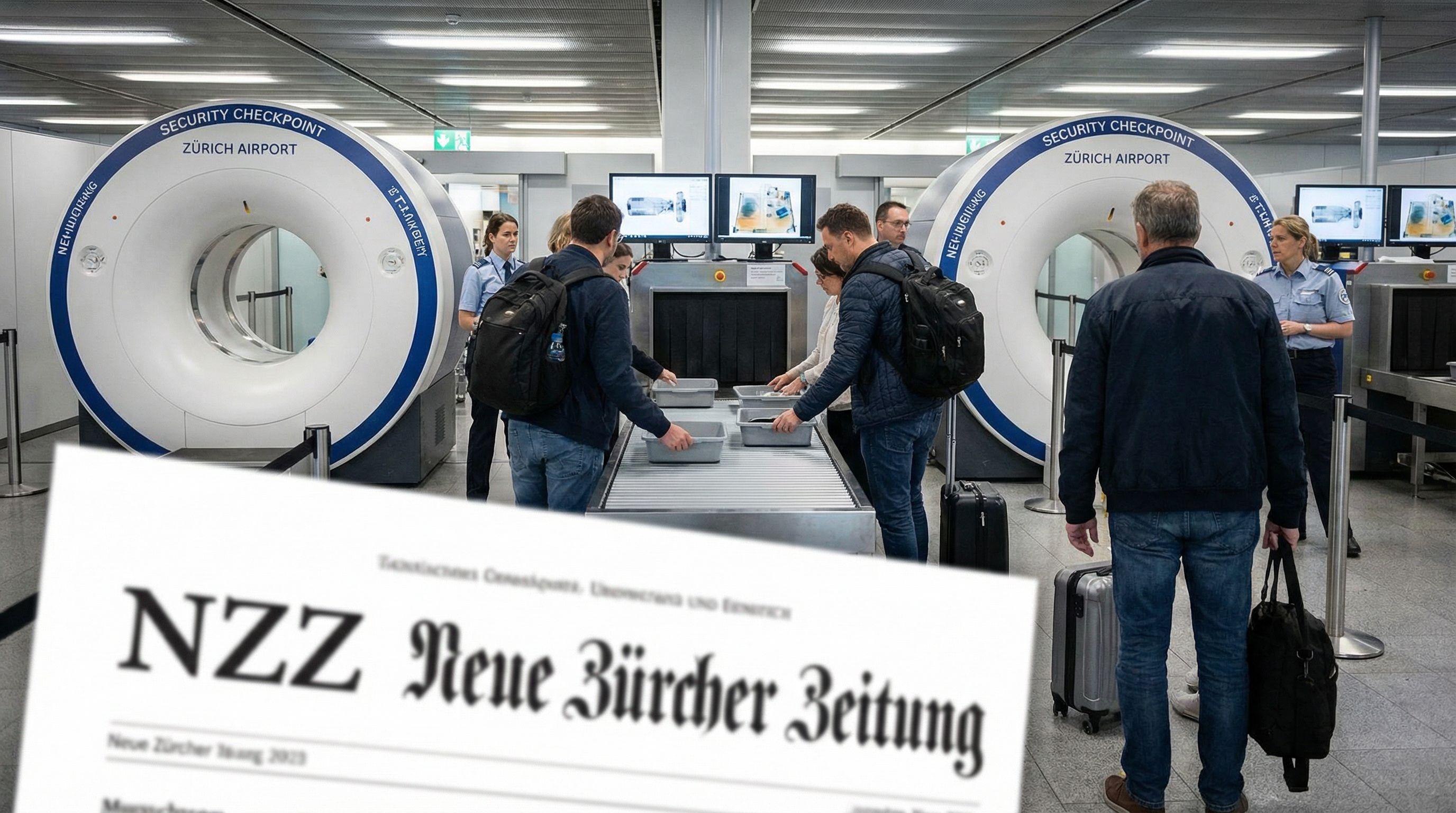
Travelers at Zurich Airport will soon be able to leave liquids and electronics in their bags during security checks. The introduction of new-generation CT scanners will streamline the process, with a gradual rollout starting immediately.
The End of the 100ml Era
The days of frantically stuffing travel-sized toiletries into flimsy plastic bags are numbered. In a monumental shift for Swiss aviation, Zurich Airport is scrapping the hated liquid restrictions, backed by a massive CHF 34 million investment in cutting-edge security infrastructure. This isn't just an upgrade; it is a total overhaul of the passenger experience.
Starting immediately, the airport is rolling out high-tech CT scanners that allow travelers to keep electronics and liquids firmly inside their hand luggage. No more laptop juggling. No more discarding water bottles at the gate. While the European Union has already begun lifting these restrictions, Switzerland’s largest hub is now aggressively catching up to streamline the flow of millions of passengers.
The implications are massive. Once fully operational, the restrictive 100ml limit will be obliterated, replaced by a generous allowance of up to two liters per container. However, travelers must remain vigilant: until the rollout hits 100 percent completion this summer, the old rules apply sporadically depending on which lane you enter. But make no mistake—the era of the 100ml limit is officially ending.
Surgical Precision: The Tech Revolution
This is a quantum leap in surveillance capabilities. The new machines are not merely cameras; they are medical-grade Computed Tomography (CT) scanners adapted for aviation security. Unlike the flat, 2D X-ray images of the past, these devices generate complex 3D volumetric models of every single bag that passes through the checkpoint.
"It’s a great leap forward in screening technology," declares Reto Lanz, Deputy Head of Airport Police Screening. The system allows security teams to virtually rotate and slice through luggage layer by layer, identifying solid and liquid explosives with unprecedented accuracy. This eliminates the guesswork that often leads to manual bag checks and bottlenecking.
Furthermore, the efficiency extends beyond the screen. A new automated tray return system ensures a constant flow of bins, while image analysis is conducted remotely in a separate room to keep the physical lanes clear. If a bag is flagged, the system pinpoints the exact location of the threat, drastically reducing the time spent on secondary searches.
Gridlock Alert: The Price of Progress
Before the smooth sailing begins, travelers must brace for a turbulent transition. The installation of these 24 massive units has triggered a critical bottleneck at Switzerland's busiest hub. Currently, a staggering 30 percent of screening capacity is offline, ripped out to make way for the new hardware.
The result is immediate and severe: long, snaking queues that threaten to derail holiday travel plans. With fewer checkpoints available to process the surging crowds, the airport management has issued a stark warning. Passengers are now urged to arrive up to three hours early for non-Schengen flights and two hours for European connections to avoid missing their departures.
"If you are planning to travel out of Zurich Airport in the days leading up to Christmas, be prepared for long and slow lines," warns local reporting. This construction chaos is expected to persist through mid-December at the earliest. It is a classic case of short-term pain for long-term gain, but for the passenger standing in line today, patience is the only currency that matters.
Summer 2026: The New Standard
By summer, the transformation will be complete. The ground floor security area is the first to go fully digital, with other floors following in rapid succession. Once the final scanner is bolted down, the restriction on liquids will officially jump from 100ml to two liters across the entire airport, aligning Zurich with the most advanced hubs in the world.
The upgrade also includes a revolution in body scanning. New detectors will replace the intrusive manual pat-downs for most passengers, using pictograms to show exactly where on the body a metal object is hidden. While Reto Lanz notes that passengers "still have to empty your pockets and take off your jacket," the flow will be faster, less invasive, and significantly more secure.
Zurich Airport is betting CHF 34 million that this technology will future-proof Swiss aviation. For the millions of travelers passing through, the promise of keeping their shoes on and their shampoo packed is a luxury worth waiting for.