AI
Written with AI assistance•15. April 2025•
ETH Zurich researchers launch groundbreaking carbon storage feasibility study in Trüllikon, exploring domestic solutions for meeting net-zero climate goals.
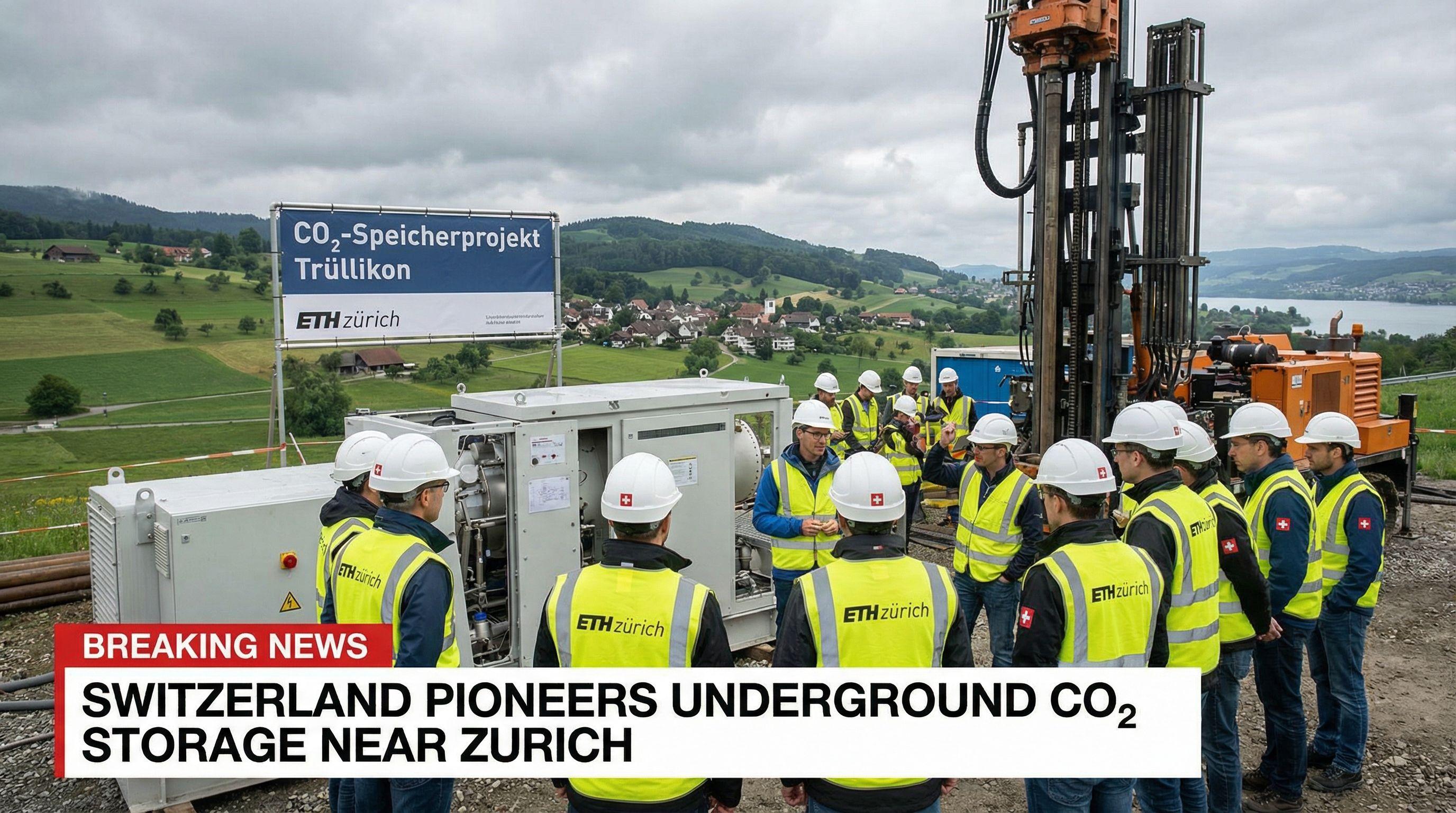
"It is not intended to become a permanent storage site. After this test, we would close the borehole and there would be no further CO₂ injected there"
"The main question right now is: should we store CO₂ in Switzerland or outside"
In a groundbreaking initiative that showcases Switzerland's commitment to climate action, ETH Zurich researchers have launched an ambitious carbon storage feasibility study in the quiet village of Trüllikon, located just 30 minutes north of Zurich. This pioneering project represents a significant step forward in Switzerland's domestic solutions for meeting its net-zero climate goals, positioning the nation at the forefront of environmental innovation.
The Trüllikon project cleverly repurposes an existing deep borehole, originally drilled for nuclear waste storage studies, into a testbed for carbon capture and storage technology. This innovative approach demonstrates Swiss efficiency in utilizing existing infrastructure for new environmental solutions. The project serves as a crucial pilot study to determine whether Switzerland should pursue domestic CO₂ storage or opt for international solutions such as storage beneath the North Sea.
Since autumn 2024, ETH Zurich scientists have been conducting detailed seismic measurements deep beneath Trüllikon's surface. These measurements feed into sophisticated computer models that assess storage capacity and potential risks. The project timeline indicates potential CO₂ injection tests beginning in mid-2026, marking a crucial phase in validating the technology's feasibility. The implementation follows strict Swiss precision and safety standards, with continuous monitoring and data collection.
Environmental safety stands at the core of the Trüllikon project's design. The temporary nature of the installation, as emphasized by project leaders, ensures minimal long-term impact on the local environment. Comprehensive safety protocols and continuous monitoring systems have been implemented to address any potential risks. The project adheres to Switzerland's stringent environmental regulations while providing valuable data for future carbon storage initiatives.
The Trüllikon project represents a crucial stepping stone in Switzerland's ambitious journey toward net-zero emissions by 2050. With plans to capture and store up to seven million tonnes of CO₂ from waste plants and cement works, the country is taking decisive action in climate protection. This initiative demonstrates Switzerland's practical approach to combining technological innovation with environmental responsibility, setting a precedent for other nations in the fight against climate change.