Energy
As Europe Rushes to Renewables, Switzerland Lags in Adoption Amid Oil Crisis
While the ongoing Middle East conflict spurs a surge in demand for solar panels and heat pumps across Europe, Swiss residents are reportedly facing hurdles that slow the transition, highlighting a potential lag in its national renewable energy strategy.
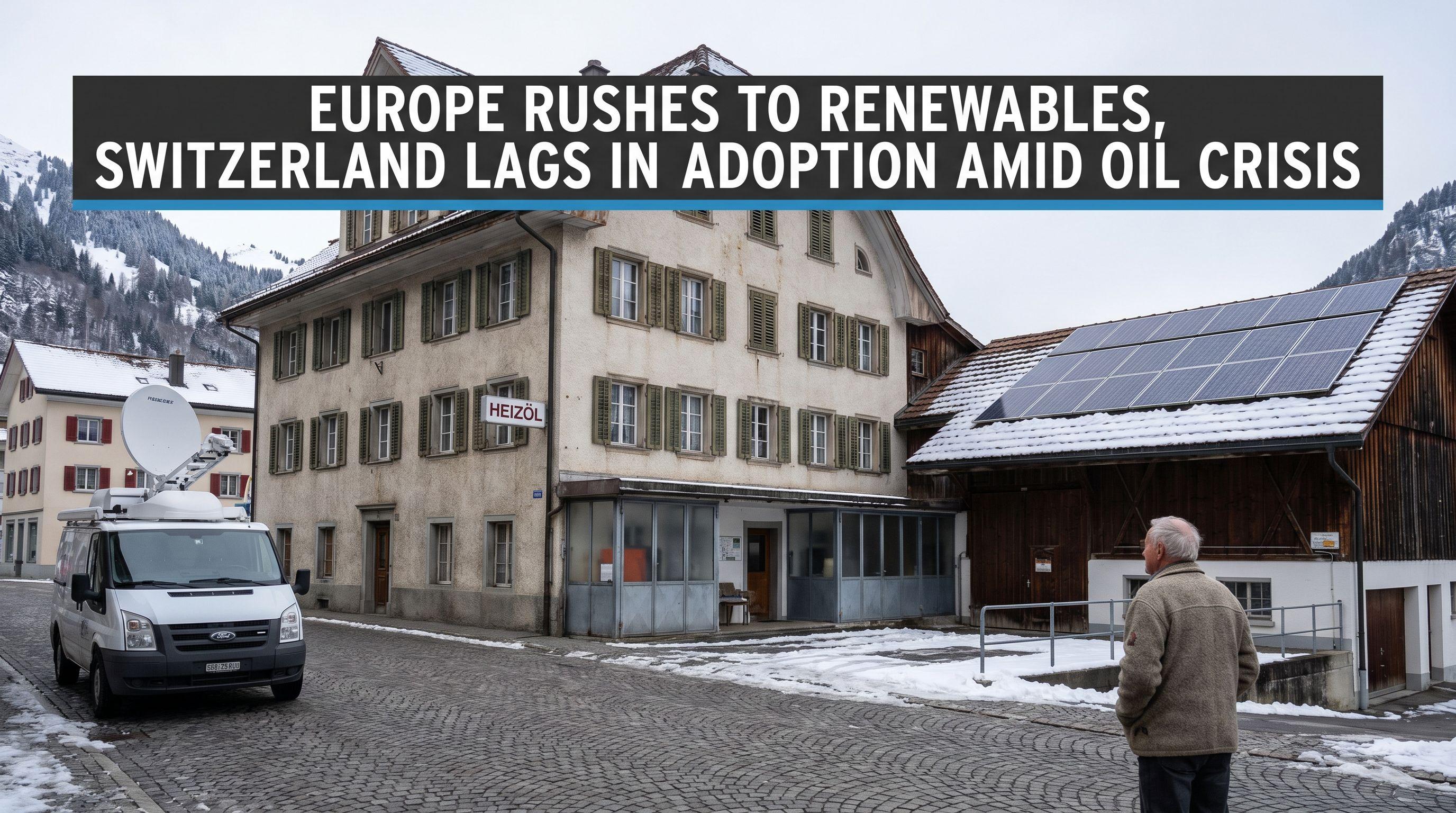
The Great Energy Divergence
A staggering 80% surge in demand for renewable energy is sweeping across Europe as the Middle East conflict sends fuel prices into a tailspin. While neighboring nations sprint toward energy independence, Switzerland is standing still. The contrast is jarring: while households in Germany, France, and the UK scramble to install solar panels and heat pumps to escape the volatility of oil, Swiss demand remains eerily flat. This isn't a lack of environmental consciousness; it is a systemic failure to convert curiosity into kilowatts. Swiss utilities report that while citizens are asking more questions than ever, they are refusing to sign on the dotted line. The 'energy transition' here has hit a wall of hesitation, leaving the Alpine nation vulnerable to the very global shocks it seeks to avoid. As the rest of the continent accelerates, the Swiss engine is idling in the face of a historic opportunity.
Decentralization Breeds Paralysis
Twenty-six different strategies for one small nation—Switzerland’s federalist approach is turning the green transition into a bureaucratic labyrinth. 'Every offer was different, subsidies depend on the canton, and the rules keep changing,' laments Patrick Andres, a homeowner in Fribourg who represents thousands of frustrated residents. This regulatory red tape is more than an inconvenience; it is a deterrent. While France and Germany offer streamlined, national low-interest loans and massive grants that slash upfront costs, Swiss homeowners must navigate a patchwork of cantonal incentives that vary wildly by postal code. This fragmentation creates a 'wait-and-see' culture. Potential investors are paralyzed by the fear of making the 'wrong' choice today only to see a better subsidy announced tomorrow. Without a unified federal roadmap, the Swiss path to net zero remains a confusing trail of local detours.
The Subsidy Vacuum Stifles Innovation
Switzerland has effectively slammed the brakes on electric mobility by ending the federal EV import tax exemption in 2024. The results are predictable and grim: EV sales have stagnated, hovering at levels seen four years ago, while Nordic neighbors like Norway and Denmark see electric cars dominate their markets through aggressive tax perks. The fiscal environment for green tech is tightening across the board. By 2029, Switzerland is set to abolish most tax deductions for property renovations, closing a critical window for homeowners to modernize their heating systems. Heat pump installations, once a beacon of Swiss engineering, plummeted during 2024-2025. In a market where upfront costs remain high, the removal of financial cushions is a death knell for rapid adoption. Switzerland is choosing austerity over acceleration, even as the oil crisis makes the cost of inaction more expensive by the day.
Nuclear Shadows and Future Friction
Ongoing debates about the future of nuclear energy are casting a long shadow over renewable investment, sending mixed signals to the market. When the national strategy is perceived as indecisive, private capital retreats. Manfred Joss of BKW confirms a 'clear gap' between public interest and actual implementation. This friction is not just about money; it is about confidence. As Europe pivots hard toward decentralized solar and wind to decouple from geopolitical instability, Switzerland’s internal debate over its energy mix acts as a drag on progress. The implication is clear: if Switzerland does not harmonize its incentives and commit to a decisive renewable path, it risks becoming an energy island—isolated not by geography, but by its own inability to move with the times. The window for a subsidized transition is closing. For the Swiss resident, the choice is becoming stark: navigate the red tape now, or pay the price of fossil fuel dependency later.