Business
Swiss Post Targets New Revenue Streams to Counter Declining Letter Business
Facing an annual revenue loss of CHF 85 million from falling letter volumes, Swiss Post's CEO announced a new strategy to diversify income, including expanding financial services through its Postfinance arm.
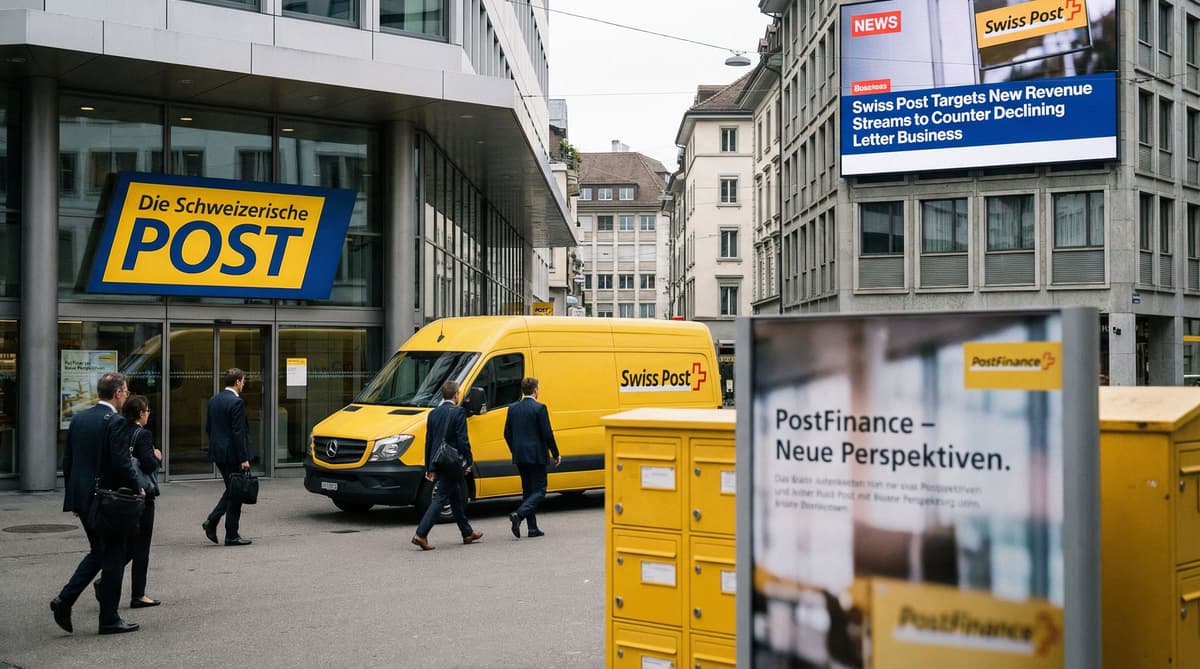
A staggering CHF 85 million vanishes from Swiss Post’s balance sheet every single year. This is the brutal reality confronting CEO Pascal Grieder as the traditional letter and newspaper business plummets into obsolescence. The state-owned giant is grappling with a fundamental shift in communication habits that has rendered its legacy operations increasingly unsustainable. While the iconic yellow mail trucks remain a staple of Swiss life, the cargo they carry is dwindling, leaving a massive financial void that threatens the very core of the institution. Grieder, who took the helm in November, is not waiting for the crisis to deepen; he is launching an aggressive counter-offensive to pivot the company toward a lucrative future. The urgency is palpable: the era of relying on the humble postage stamp to fund a national infrastructure is officially over.
Postfinance: The New Engine of Growth
More than 250,000 people flood into Swiss Post’s 700+ branches every day, and CEO Pascal Grieder intends to monetize every single one of them. The strategy is clear: transform the post office from a mail hub into a financial powerhouse. By deepening the integration of Postfinance—the group's financial arm—Swiss Post aims to capture a greater share of the Swiss banking market. Grieder is betting big on 'customer frequency,' viewing the massive daily foot traffic as an untapped goldmine for financial services. This isn't just a minor tweak; it’s a total reimagining of the retail space. Expect to see financial advisors and digital banking kiosks taking center stage in local branches, as the company pivots to ensure that every visitor contributes to the bottom line. The goal is to make Postfinance the primary engine that offsets the structural decline of the postal sector.
Digital Dominance: Triple-Digit Surges in Virtual Mail
Digital letters are no longer a futuristic concept—they are a booming reality, recording growth rates in the triple-digit percentage range. Since being integrated into the basic postal service earlier this month, the adoption of digital mail has been nothing short of explosive. This surge represents the silver lining in Swiss Post’s digital transformation. While physical paper mail is becoming a luxury of the past, the appetite for secure, instantaneous digital communication is soaring. Swiss Post is positioning itself as the trusted intermediary in this new digital landscape, proving that it can evolve alongside the needs of a tech-savvy Swiss population. This rapid pivot to digital isn't just about convenience; it’s a critical survival tactic in an environment where physical logistics are becoming prohibitively expensive.
The Profitability Ultimatum: Survival of the Fittest Branches
The math is simple and devastating: processing a letter in a branch now costs more than the price of the stamp itself. This operational paradox has forced Grieder to issue a profitability ultimatum that will decide the fate of the national branch network. After 2028, the survival of any given Swiss Post location will depend entirely on its ability to turn a profit. The company can no longer afford to maintain underperforming outposts in a climate of high fixed costs and declining mail volume. This shift marks a dramatic departure from the traditional public service mandate, signaling a move toward a more lean, commercially-driven infrastructure. While the social role of the post office remains significant, the economic reality is that only the profitable will survive the upcoming consolidation. The map of Swiss Post locations is set for a radical redesign.