Demographics
A Turning Point for Switzerland: Retirees Now Outnumber the Youth
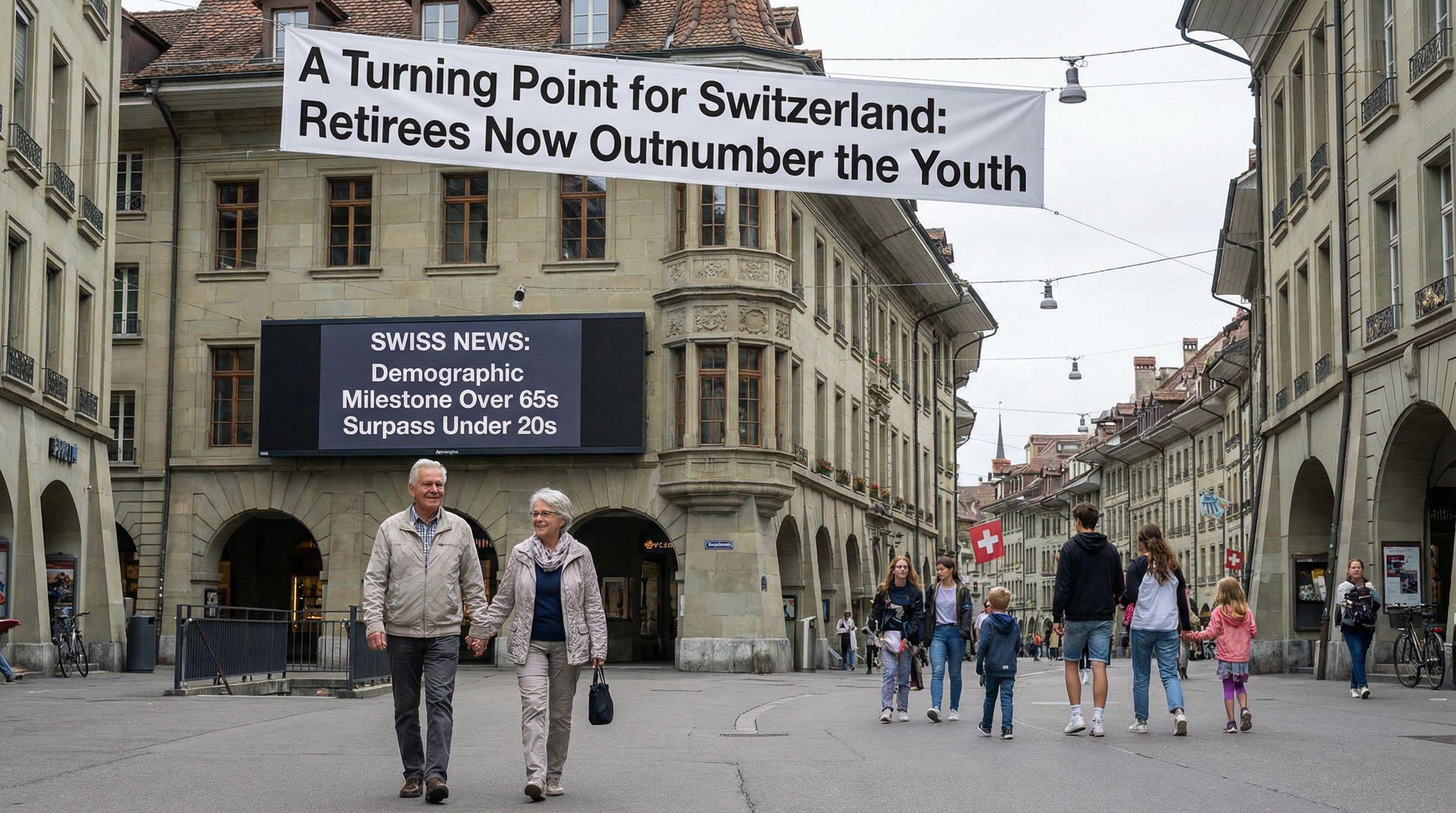
For the first time in its history, Switzerland's population of residents over 65 has surpassed those under 20. This demographic milestone signals profound challenges and necessary policy shifts for the nation's social security, healthcare, and workforce.
Switzerland Crosses the Demographic Rubicon
Switzerland has reached a historic and irreversible tipping point: for the first time in the nation’s history, retirees officially outnumber the youth. Data released by the Federal Statistical Office (FSO) confirms a seismic shift where 1.81 million residents are now aged 65 or older, eclipsing the 1.80 million citizens under the age of 20. This is not merely a statistical quirk; it is a fundamental transformation of the Swiss social fabric. While the total population surged to 9.12 million in 2025, this growth masks a hollow core. The fertility rate has plummeted to a staggering 1.28 children per woman, a figure far below the replacement level needed to sustain a stable society. Meanwhile, Swiss longevity continues to defy gravity, with women now expected to live to 86.3 years and men to 82.7. We are living longer, but we are failing to renew ourselves. This demographic inversion places Switzerland in uncharted territory, forcing a confrontation with the reality that the 'Old Guard' now holds the numerical advantage over the next generation.
The Pension Time Bomb Ticks Louder
A staggering 32.9 seniors now depend on every 100 working-age residents—a dependency ratio that has surged from just 25.7 two decades ago. This mathematical reality is a direct assault on the stability of the Swiss pension system (AHV/AVS). As the 'Baby Boomer' generation exits the workforce in droves, the pool of contributors is shrinking just as the payout obligations reach record highs. The Avenir Suisse think tank warns that this divergence creates 'significant repercussions' for state finances that cannot be ignored. The burden of seniors continues to grow, and the economic friction is becoming palpable. In 2025 alone, deaths remained stable at 71,700 while births continued their downward trajectory, falling in 18 of the 26 cantons. This imbalance threatens the very prosperity that has defined Switzerland for a century. Without a radical restructuring of how we fund our golden years, the social contract between generations risks a total collapse under the weight of an aging population that the youth can no longer afford to support.
Immigration Ignites a Political Firestorm
The Federal Council has issued a blunt ultimatum: Switzerland must embrace immigration or face economic stagnation. Government experts like Raymond Kohli argue that the renewal of the workforce 'must largely take place through immigration' to fill the void left by a vanishing youth. However, this solution has ignited a fierce political backlash. The right-wing Swiss People’s Party (SVP) has slammed the brakes on this narrative, launching an initiative to prevent the population from hitting 10 million by 2045. They argue that the infrastructure—housing, schools, and the healthcare system—is already screaming under the pressure of rapid growth. A pivotal referendum set for June 14th will decide whether Switzerland tightens its borders or follows the government’s path of 'economic migration' to save the labor market. The tension is electric: while economists insist that foreign labor is the only lifeline for a graying nation, critics fear that the very identity and livability of Switzerland are at stake in this demographic gamble.
Rewriting the Rules of Retirement
The era of the 'hard stop' at age 65 is dying. To keep the economy afloat, the Federal Council is aggressively incentivizing seniors to remain in the workforce well beyond the statutory retirement age. The government is currently drafting plans to raise the contribution-exempted amount—currently set at 16,800 CHF—to make post-retirement employment more lucrative for those who choose to stay. This shift aims to transform retirees from a 'burden' into a vital economic asset. By keeping money flowing into the pension funds and maintaining a high-skill labor pool, Switzerland hopes to mitigate the shock of its shrinking youth. This is the new Swiss reality: a society where 'retirement' is a fluid concept and the silver economy is the primary engine of growth. As we look toward 2030, the success of these policies will determine whether Switzerland remains a global economic powerhouse or becomes a picturesque museum for the elderly. The choice is clear: adapt the workforce or watch the nation's vitality fade.