legal
Court Sets Precedent, Restricting Swiss Stay for Refugees with Prior EU Protection
In a landmark verdict, Switzerland's Federal Administrative Court has ruled that Ukrainian refugees previously granted protection in an EU or EFTA state are not eligible to remain in Switzerland, establishing a significant new precedent for national asylum policy.
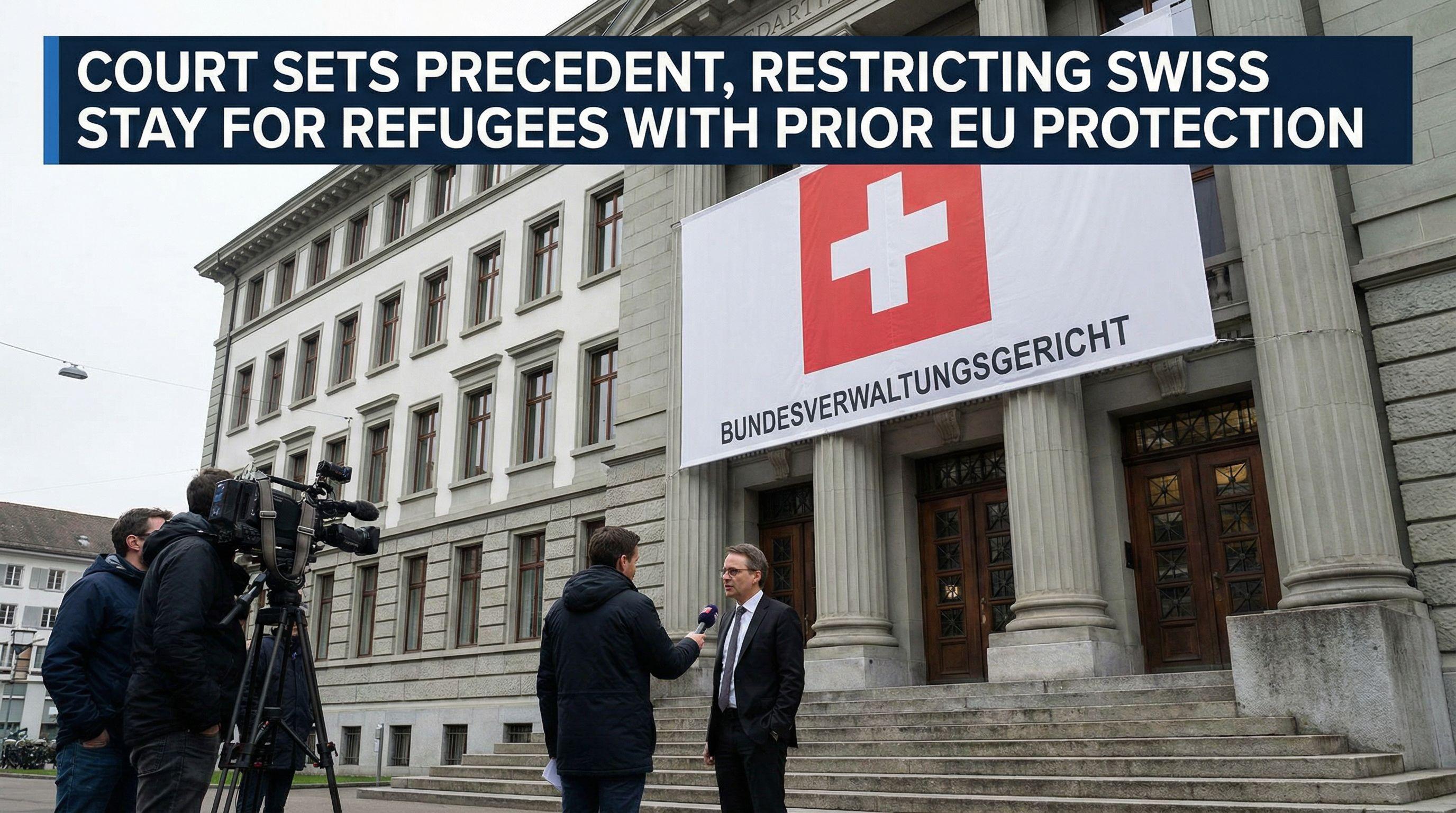
Switzerland Slams the Door on Secondary Movement
Switzerland has drawn a definitive line in the sand. In a landmark verdict that reverberates through the halls of European migration policy, the Federal Administrative Court has ruled that Ukrainian refugees previously granted protection in an EU or EFTA state are categorically ineligible to remain in Switzerland. This is not merely a rejection of a single application; it is a systemic tightening of the nation's borders against secondary movement.
The court's message is blunt and uncompromising: prior admission elsewhere equates to inadmissibility here. This ruling fundamentally alters the landscape for those fleeing the ongoing conflict, stripping away the option to 'shop' for asylum destinations after receiving safety in a partner nation. While the Ukraine crisis continues to displace millions, Switzerland is signaling that its hospitality is reserved strictly for those who have not yet found refuge under the European umbrella. This decision cements a legal barrier that the State Secretariat for Migration (SEM) will now enforce with renewed judicial backing, ensuring that Switzerland does not become a secondary destination for those already shielded by European law.
The Catalyst Case: From Italy to Deportation
A single, complex journey has triggered this sweeping policy shift. The case centers on a Ukrainian woman whose path across Europe exposed the friction between humanitarian need and legal jurisdiction. Following the Russian invasion, she sought sanctuary in Italy, living there with her sisters and attending school until December 2022. Italy granted her temporary protection valid through March 2023—a critical legal fact that would later seal her fate in Switzerland.
After a brief return to Ukraine to join a sister, the woman fled the war-torn nation once again in February 2025, this time aiming for Switzerland where her mother resided. However, the State Secretariat for Migration (SEM) refused to overlook her history. Despite her family ties in Switzerland and the renewed flight from danger, SEM rejected her application and ordered her deportation. The court has now validated this hardline stance, confirming that her prior safety net in Italy—even if expired or abandoned—disqualifies her from Swiss protection status. This individual tragedy has now calcified into a national standard.
Judicial Precedent: A Unified Front
This was no routine administrative review. Recognizing the gravity of the issue, judges from three separate court divisions convened to deliver a joint verdict, ensuring that this decision carries the weight of a binding precedent. By unifying their stance, the Swiss judiciary has eliminated ambiguity for future cases. This is a coordinated maneuver to streamline the asylum process and empower the SEM to swiftly process—and reject—similar applications.
The implications are staggering for the legal community. Lawyers representing Ukrainian refugees now face an almost insurmountable hurdle if their clients have any history of protection within the EU or EFTA zones. The court has effectively closed the loophole of 'chain migration' driven by family reunification or economic preference after initial safety has been secured. This unified judicial front demonstrates that the Swiss legal system is prioritizing the integrity of the Dublin Regulation principles, even in the face of the unique humanitarian challenges posed by the Ukrainian war.
Breaking Ranks: The New Asylum Reality
Switzerland is increasingly charting a solitary course in its handling of the Ukrainian crisis. This verdict arrives on the heels of the government's October 2025 decision to update 'S status' rules, which introduced strict regional distinctions for eligibility. By enforcing these restrictions, Switzerland breaks ranks with the broader, more permissive approaches seen in some EU jurisdictions, asserting its sovereignty over migration control.
While the EU grapples with burden-sharing, Bern is signaling that its capacity is finite and its rules are rigid. The message to the international community is clear: Swiss solidarity has limits defined by strict legal parameters. For refugees, the window of opportunity is narrowing. As 2026 progresses, the Swiss asylum system is transforming into a fortress of technicalities, where prior safety elsewhere is the ultimate disqualifier. This policy shift forces refugees to think twice before leaving their first country of asylum, knowing that the Swiss border is now guarded not just by officers, but by an ironclad judicial precedent.