AI
Written with AI assistance•8. Januar 2026•
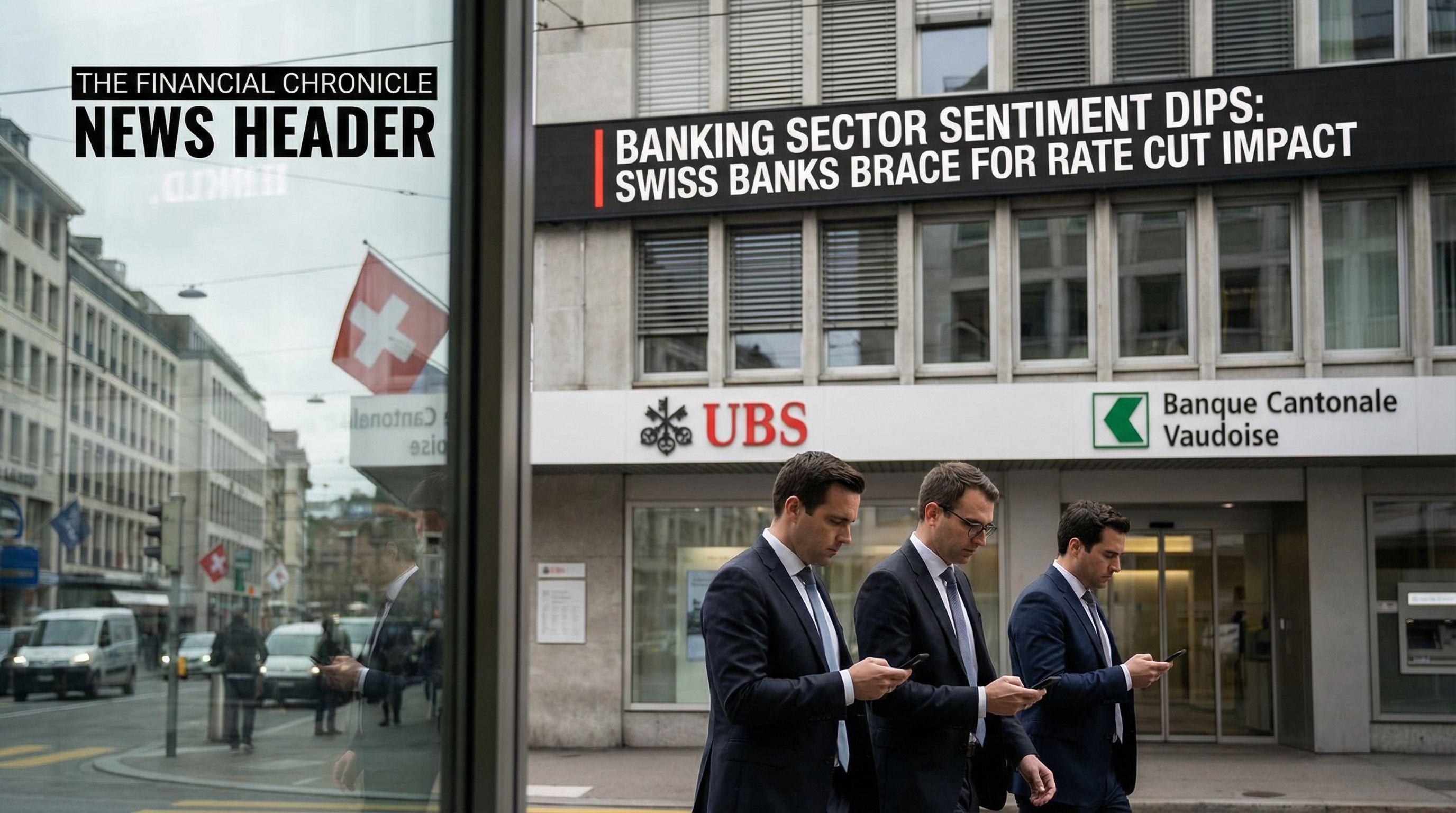
According to the new EY Banking Barometer, optimism among Swiss banks has soured, with nearly half expecting a decline in operating results due to pressure on margins from falling interest rates.
"This is the worst level of sentiment in 15 years."
"The Swiss financial centre is still well-positioned, despite the collapse of Credit Suisse."
The golden era of easy returns is officially over. In a staggering shift in sentiment, nearly half of all Swiss banks—46% to be precise—are bracing for a decline in operating results for 2025. This is not merely a dip; it is a plunge. According to the latest EY Banking Barometer, this represents the bleakest outlook the sector has witnessed in 15 years. The confidence that buoyed the industry through recent global turbulence has soured as the reality of a tighter economic environment sets in.
Surveying over 100 institutions, the data reveals a stark departure from the record-breaking performances of the past two years. While the majority of banks still expect margins in the interest business to stabilize, the overall mood is undeniably grim. The anticipation of shrinking profits is a wake-up call for a sector that has long enjoyed the buffer of favorable monetary policies. As 2026 unfolds, the message is clear: the headwinds are here, and they are stronger than anticipated.
The culprit behind this pessimistic turn is unambiguous: the return to zero. With the Swiss National Bank (SNB) slashing key interest rates back down to 0%, the lucrative margins that banks enjoyed are evaporating. For years, the interest business has been the central pillar of earnings for Swiss financial institutions. Now, that pillar is fracturing under the weight of monetary policy adjustments.
The authors of the Banking Barometer note a continuous decrease in interest margins, leaving institutions with little room for optimization. The environment has shifted from one of effortless yield to a grind for every basis point. This return to a low-margin reality forces banks to confront a difficult truth: the "free lunch" provided by higher rates has been taken off the table. As the SNB maintains this zero-percent baseline to manage broader economic factors, banks are left to navigate a landscape where their primary revenue engine is sputtering.
Not all banks are suffering equally; a deep fracture has emerged within the sector. Regional and Cantonal banks are standing directly in the path of the storm. Because these institutions are heavily reliant on traditional interest businesses—mortgages and savings—they are disproportionately battered by the falling rates. In previous years, these domestic powerhouses achieved record results; today, they face the steepest declines.
In sharp contrast, private banks and foreign institutions are weathering the turbulence with far more resilience. Thanks to their diversified revenue streams, particularly stable commission income from wealth management, they remain much less pessimistic. This divergence highlights a critical vulnerability in the traditional Swiss banking model: over-reliance on interest income is a dangerous gamble in a volatile monetary environment. While the global players pivot, local institutions are left scrambling to protect their bottom lines.
Despite the immediate gloom, the Swiss banking sector refuses to bet against itself in the long run. In a display of overwhelming confidence, a staggering 94% of banks expect operating results to rise over a three-year horizon. This is a significant jump from the 85% recorded the previous year, signaling that while the short-term forecast is stormy, the structural integrity of the Swiss financial center remains ironclad.
This long-term optimism suggests that banks view the current margin squeeze as a temporary cyclical hurdle rather than a systemic failure. Institutions continue to trust in the robustness of their business models and the enduring appeal of the Swiss brand. As Marcel Rohner of the Swiss Bankers Association noted, the center remains well-positioned despite past shocks. The strategy is clear: endure the pain of 2025 to reap the rewards of a stabilized, evolved market in the years to follow.