AI
Written with AI assistance•27. Januar 2025•
Army head Thomas Süssli expresses concern about seven delayed military equipment orders, including Israeli drones, warning of impact on Switzerland's defense capabilities.
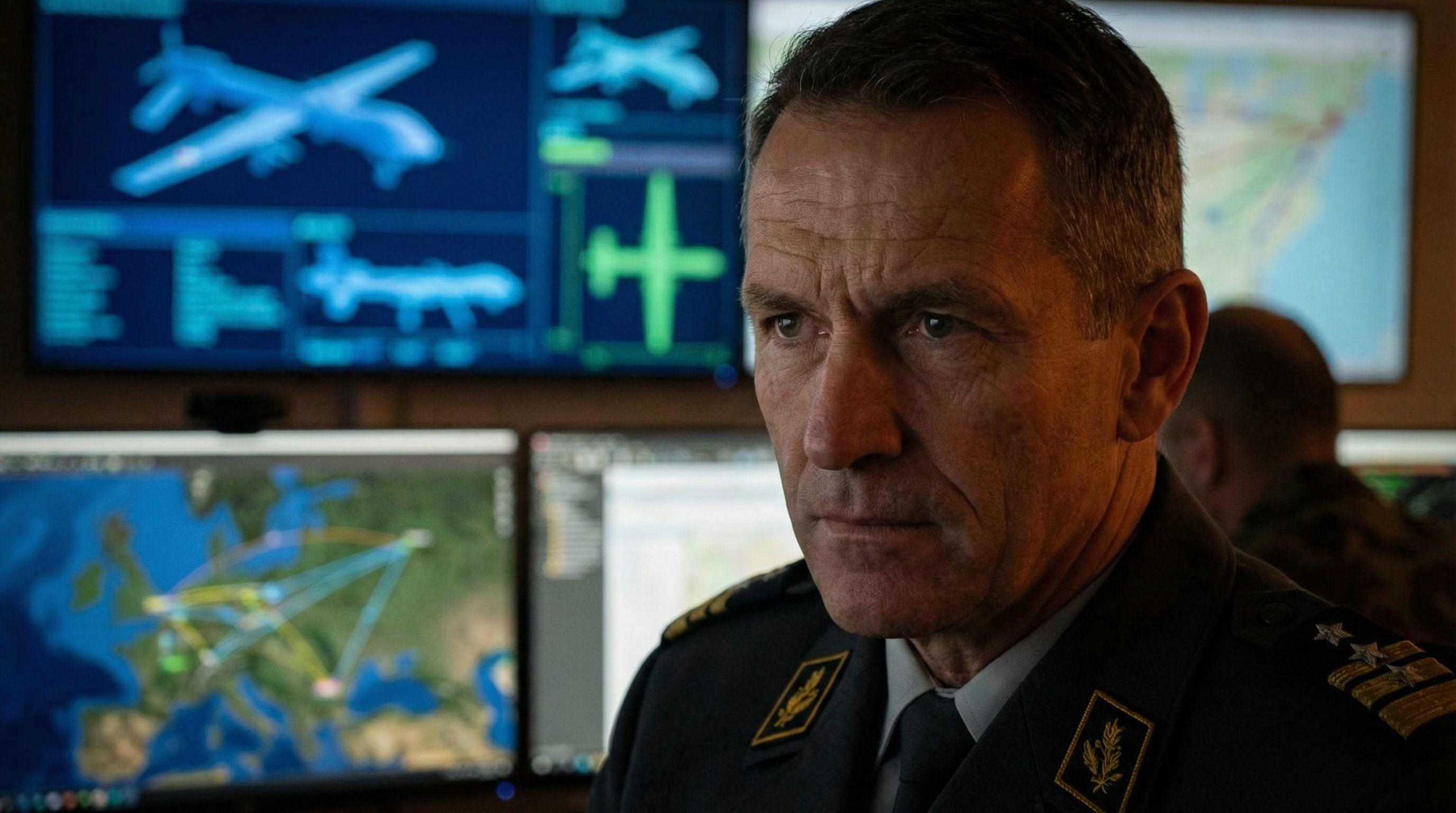
"These projects all have the purpose of strengthening the army’s defence capability."
"Insufficient to credibly demonstrate that we are prepared to defend Switzerland’s sovereignty."
Switzerland’s defense shield is showing cracks. Army Chief Thomas Süssli has issued a stark admission that ripples through the halls of the Federal Palace: the nation's current military equipment is "insufficient to credibly demonstrate" that the army can defend Swiss sovereignty. This is not merely a bureaucratic hiccup; it is a direct challenge to the core mandate of the Swiss Armed Forces.
At the heart of the crisis are seven critical equipment orders that have stalled, creating a capability gap that Süssli describes with uncharacteristic bluntness. While the Army Chief notes that the risk is currently "acceptable," the tone of his interview with the Neue Zürcher Zeitung suggests a situation that demands immediate rectification. The admission that the army struggles to prove its readiness to defend the nation's borders is a wake-up call for lawmakers and citizens alike. In a geopolitical climate that punishes weakness, Switzerland cannot afford to let its famed neutrality be mistaken for vulnerability.
Among the seven delayed projects, the acquisition of Israeli military drones stands out as a glaring bottleneck. This specific procurement failure highlights the fragility of international supply chains in the defense sector. The Federal Audit Office has already leveled harsh criticism at the government for poor planning regarding these six drones, a sentiment that Süssli now echoes by confirming the delay's impact on defense capabilities.
These are not luxury items; they are the eyes in the sky essential for modern warfare and surveillance. The inability to secure these assets on time forces the Swiss military to operate with a blind spot. While Süssli emphasizes that these projects are designed to "strengthen the army’s defence capability," the gap between intention and execution is widening. The reliance on foreign suppliers for critical tech like the Israeli drones exposes a strategic vulnerability that the procurement office is now scrambling to manage.
Despite the headlines dominated by the seven stalled initiatives, the broader picture offers a degree of stability. Süssli points out that the vast majority of the approximately 200 ongoing army projects are proceeding without incident. However, the failures are symptomatic of a larger issue: the sheer complexity of modern military logistics. The reasons for the delays are manifold, ranging from underestimated project intricacy to severe global delivery bottlenecks.
The friction is not just in acquiring hardware but in establishing the war logistics required to support it. Süssli admits that the timeline for setting up these logistical backbones remains unclear. This uncertainty adds a layer of fog to the army's planning. High requirements coupled with a strained global supply chain mean that even a well-funded Swiss military is not immune to the realities of the market. The challenge now is to insulate the 193 successful projects from the systemic issues plaguing the critical seven.
The clock is ticking loudly for the Swiss Air Force. A new airspace surveillance system must be fully operational by 2029 at the latest. This is a hard deadline; there is no room for the "manifold" delays affecting other sectors. Süssli asserts that until that date, the risk is manageable, but the margin for error is razor-thin.
Airspace sovereignty is the cornerstone of Swiss defense strategy. If the new systems are not online and integrated within the next four years, the "acceptable risk" Süssli speaks of could rapidly escalate into a critical security failure. The pressure is now on the procurement teams to deliver complex technology against a rigid timeline. As 2029 approaches, the Swiss public will be watching closely to see if their military leadership can turn concern into capability before the deadline passes.