Diplomacy
Polish President Received in Bern to Strengthen Economic Ties
Polish President Karol Nawrocki was received in Bern with military honours, reflecting a deepening relationship between the two nations. Discussions focused on economic relations, with Poland being Switzerland's largest trading partner in Central Europe.
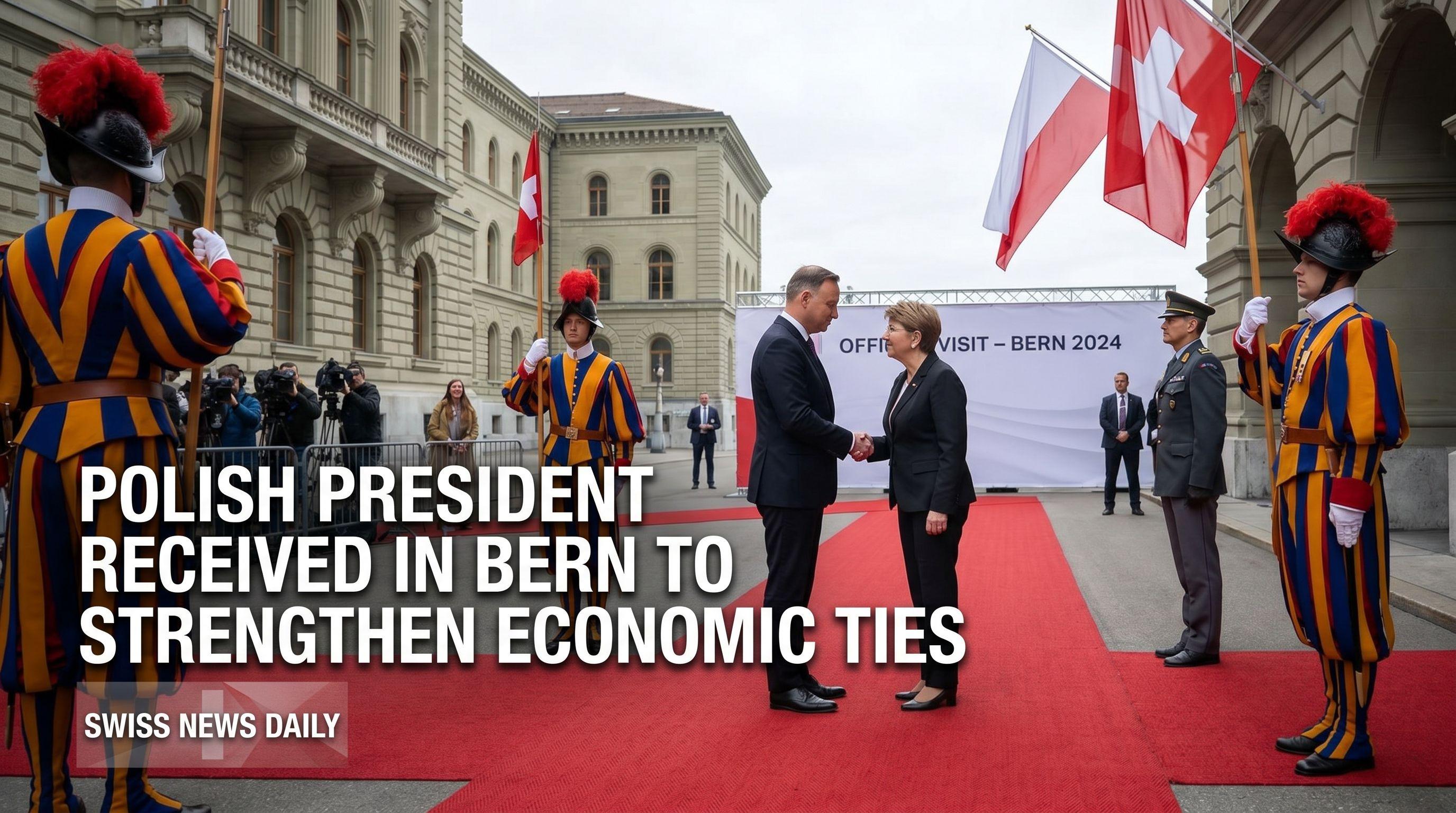
Bern Rolls Out the Red Carpet
A powerful display of military precision and diplomatic prestige gripped Parliament Square this Wednesday as Polish President Karol Nawrocki arrived in the Swiss capital. This was no mere courtesy call; the reception with full military honors signals a definitive shift in Bern's strategic priorities toward Central Europe. President Guy Parmelin declared that cooperation has 'never been better,' a bold assertion that underscores the deepening bond between the Alpine nation and the Polish powerhouse. The atmosphere in Bern was electric, reflecting a relationship that has transcended traditional diplomacy to become a cornerstone of Swiss foreign policy. As the honor guard stood at attention, the message was clear: Switzerland is doubling down on its most vital partner in the East. This visit serves as a high-stakes reaffirmation of mutual respect in an increasingly fragmented geopolitical landscape.
A CHF 6.5 Billion Powerhouse
A staggering CHF 6.5 billion in annual trade now flows between Switzerland and Poland, cementing Warsaw’s position as Bern’s undisputed top trading partner in Central Europe. This figure, recorded in 2025, represents more than just a statistic; it is a testament to an economic engine that is firing on all cylinders. Trade volume has surged as Swiss precision meets Polish industrial scale, creating a symbiotic relationship that defies regional economic slowdowns. Every billion francs exchanged represents thousands of jobs and dozens of joint ventures that span from pharmaceutical giants to high-tech manufacturing. While other European markets grapple with stagnation, the Swiss-Polish corridor is soaring. The discussions in Bern focused heavily on removing further barriers to trade, ensuring that this $8.25 billion relationship continues its upward trajectory. This economic marriage of convenience has evolved into a strategic necessity for both nations.
Investing in the Polish Engine
Switzerland is injecting a critical CHF 320 million into the Polish economy through the EU cohesion fund, the largest share allocated to any single nation. This massive investment is not charity; it is a calculated masterstroke that fuels Swiss interests abroad. By targeting medium-sized Polish cities and cutting-edge research sectors, Bern is effectively priming the pump for its own multinational corporations. As President Parmelin emphasized, when Polish infrastructure improves, the entire regional economy benefits—and with it, the numerous Swiss firms embedded in the Polish market. This 'Swiss Contribution' acts as a catalyst for innovation, bridging the gap between Eastern European potential and Western European capital. The funds are currently being funneled into high-impact projects that transform urban landscapes and accelerate R&D, ensuring that Poland remains a fertile ground for Swiss investment for decades to come.
The New Era of Central European Synergy
The implications of this visit extend far beyond the cobblestones of Bern; they signal a new era of Central European synergy that could redefine Switzerland’s role on the continent. As the Swiss-EU accords face intense scrutiny in both Strasbourg and Bern, the bilateral success with Poland provides a blueprint for pragmatic, results-oriented diplomacy. President Nawrocki’s visible impression of Switzerland’s localized knowledge of Polish development highlights a level of diplomatic intimacy rarely seen between these two nations. Looking ahead, the focus will shift toward deepening research ties and expanding the footprint of Swiss SMEs in Poland’s booming provincial hubs. This relationship is no longer just about trade; it is about building a resilient, interconnected economic bloc that can withstand global volatility. As Bern and Warsaw align their interests, the rest of Europe is watching a masterclass in how sovereign nations can build a powerhouse partnership in the 21st century.