Geopolitics
Middle East Conflict Ripples Through Switzerland, Impacting Travel and Fuel Prices
The ongoing war in Iran is creating tangible effects in Switzerland, with diesel and petrol prices rising and holiday travel plans being disrupted. In response, Swiss International Air Lines is suspending some services to the Middle East and adding 74 new flights to European destinations.
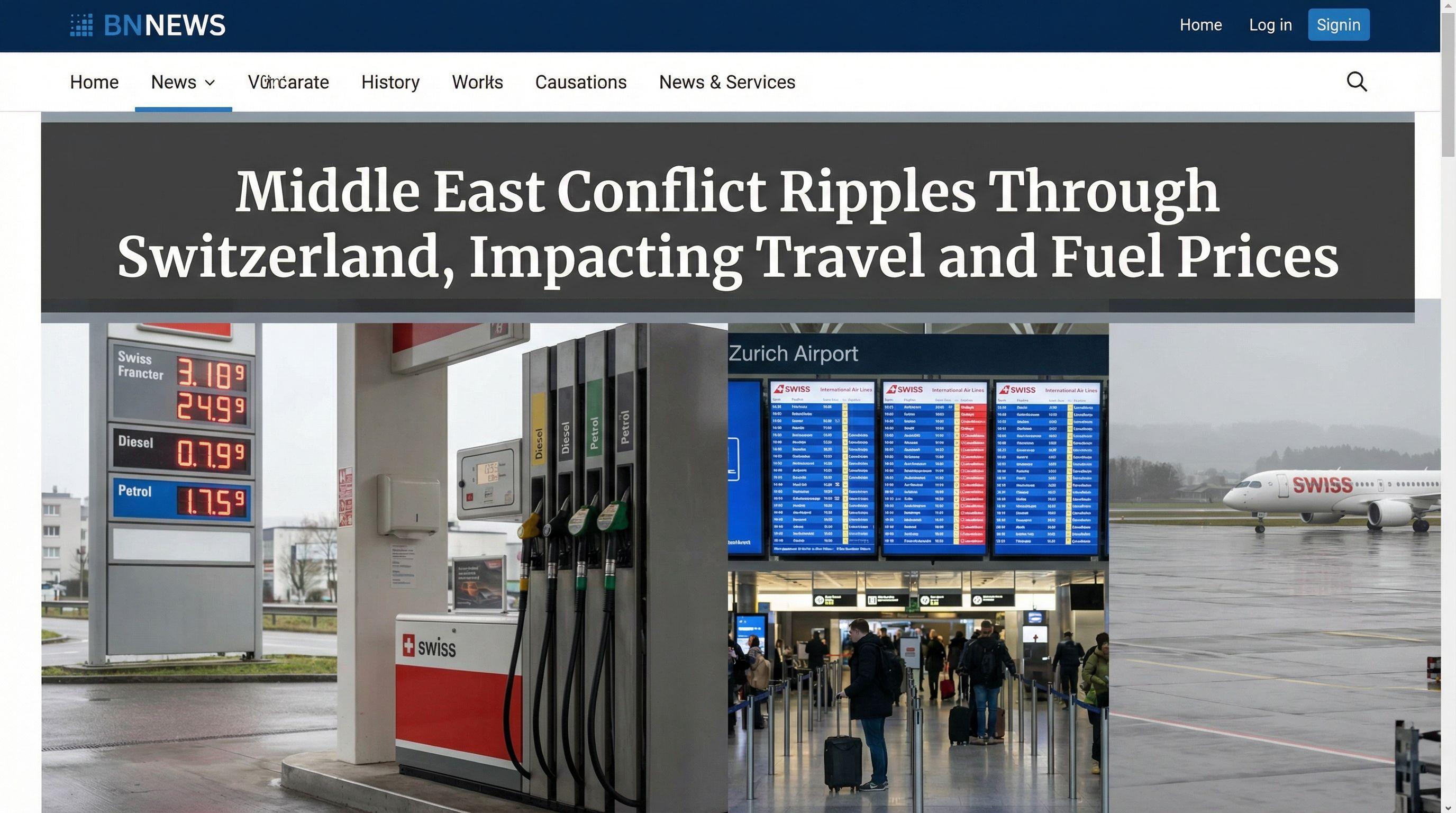
Shockwaves at the Pump: Fuel Prices Explode
Switzerland is reeling from a staggering 22% surge in diesel prices in just thirty days. As the conflict in Iran intensifies, the cost of diesel has rocketed to CHF 2.13 per litre, a level that threatens to disrupt the nation's logistics and transportation backbone. This isn't just a minor fluctuation; it is a systemic shock. Data monitored by the Touring Club Schweiz (TCS) across 3,500 petrol stations reveals that Unleaded 95 has also jumped by 11%, now sitting at CHF 1.82. The speed of this escalation is unprecedented in recent Swiss history, leaving commuters and businesses grappling with an immediate financial burden. While the global oil market remains volatile, the Swiss consumer is feeling the sting directly at the nozzle, with every tank of fuel now costing significantly more than it did a mere month ago. This energy spike acts as a regressive tax on the entire population, siphoning wealth away from households and into the volatile abyss of geopolitical instability.
Aviation Pivot: SWISS Abandons the Gulf for Europe
SWISS International Air Lines has executed a dramatic strategic retreat, suspending all flights to Tehran, Dubai, and Abu Dhabi, with some routes cancelled until late October 2026. This massive withdrawal of long-haul capacity has forced a radical reallocation of the fleet. In a bold move to salvage the summer season, the national carrier is launching 74 additional flights to European hotspots. Destinations like Malaga, Athens, and Venice will see a surge in frequency as the airline 'deploys freed-up capacity in a targeted manner.' However, the pivot comes with a cost. Geneva Airport is bleeding CHF 450,000 every single week in lost landing and passenger fees. While European sun-seekers may benefit from more options to Palma de Mallorca, the loss of the Middle Eastern hubs creates a massive vacuum in global connectivity. To mitigate the severance of Asian transit routes, SWISS is doubling down on India, adding a second daily flight to Delhi to maintain a lifeline to the East.
The 5 Billion Franc Bill: Economic Growth Stalls
The conflict is set to drain nearly CHF 5 billion from the Swiss economy annually. This alarming estimate from ETH Zurich researcher Cyril Brunner assumes that energy prices remain at their current elevated levels, translating to a crushing CHF 1,200 extra cost per household. The State Secretariat for Economic Affairs (SECO) has already blinked, slashing its 2026 GDP growth forecast to a meager 1%. Inflationary pressures are no longer a distant threat; they are a present reality dampening the international economic outlook. The Swiss franc, traditionally a safe haven, is being tested as the nation confronts a steep energy bill that could derail post-pandemic recovery efforts. Experts warn that if the war continues to escalate, the downward pressure on growth will intensify, potentially forcing further revisions to national economic targets. Switzerland is no longer an island of stability; it is a nation confronting a critical financial squeeze that reaches from the federal treasury down to the kitchen table.
Deserted Alps: Tourism Industry Braces for Impact
In the heart of the Bernese Oberland, the silence is deafening. Interlaken has already reported a 10% drop in visitors, particularly from the lucrative Indian and Chinese markets. The Swiss tourism industry is facing a 'massive loss' if the conflict persists through the peak summer season. Hotel owners in Grindelwald report that guests from the Arab world are putting off their visits indefinitely, leaving luxury suites empty during what should be a bustling spring period. The Jungfrau Railways, a crown jewel of Swiss tourism, is already contemplating a hiring freeze as passenger numbers dwindle. This regional slump highlights a painful irony: while SWISS airline pivots to European tourists, the high-spending international visitors who sustain the Alpine economy are staying home. The dilemma for holidaymakers is clear—change plans or wait in uncertainty. For the Swiss tourism sector, the stakes could not be higher; a prolonged war in the Middle East doesn't just impact the Gulf, it threatens to leave the Swiss Alps deserted during their most critical season.