Weather
Extreme Heatwave Triggers High-Level Alerts and Public Responses Across Switzerland
Swiss authorities have issued level 3 and 4 heat warnings as a major heatwave hits the country, with temperatures forecast to reach 36°C. MeteoSwiss indicates the warnings are likely to be extended. In response to the recurring heat, the SBB rail app has been updated to show passengers which train carriages are equipped with air conditioning.
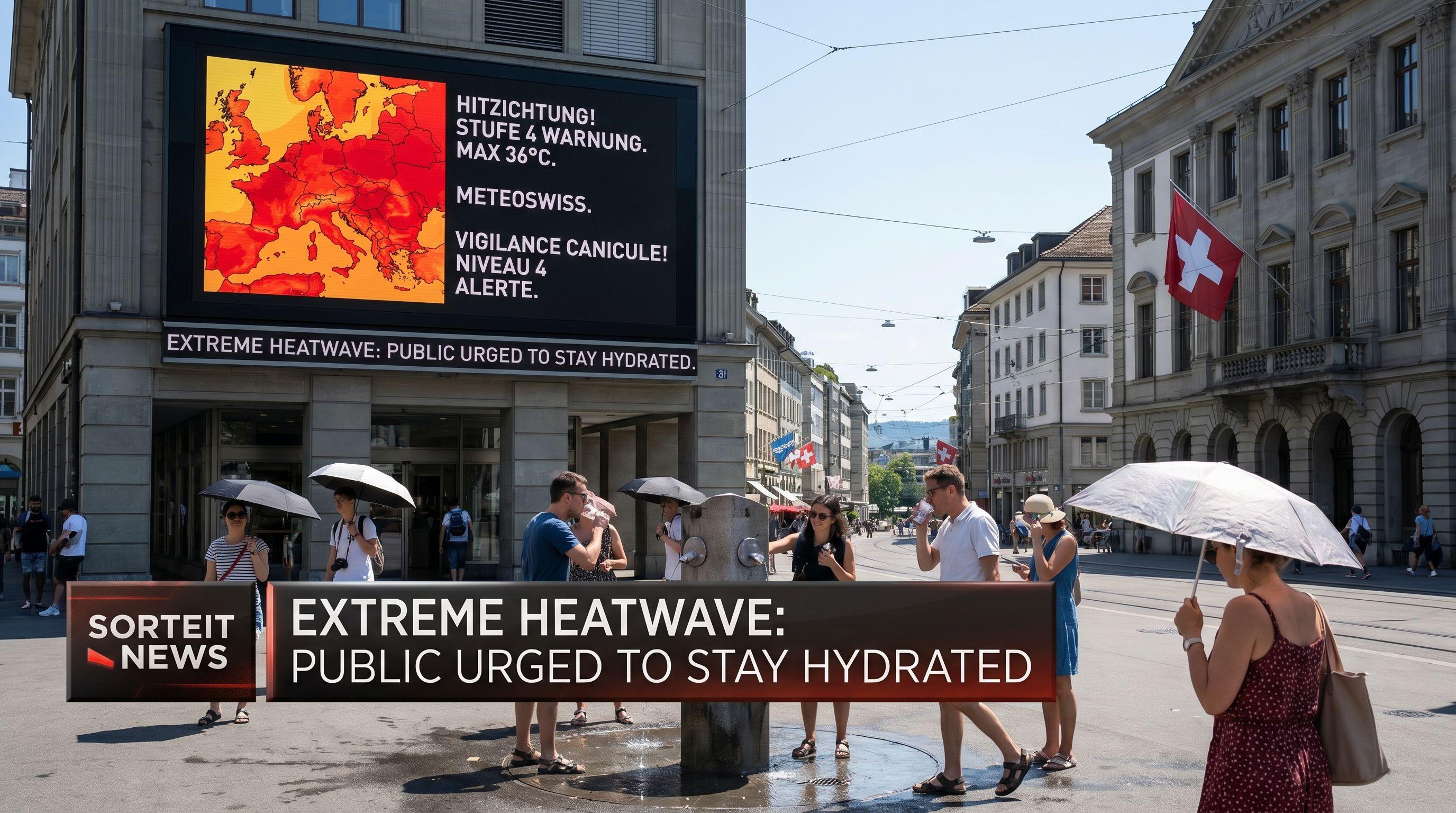
Switzerland Swelters Under Maximum Alert
Switzerland is currently grappling with a staggering meteorological onslaught as temperatures soar toward a record-breaking 38°C. MeteoSwiss has officially triggered Level 3 and Level 4 heat warnings, placing the nation on high alert. The Basel region, in particular, confronts the highest level of emergency as the mercury climbs with unprecedented speed. Shortly before noon on the first day of the surge, Basel-Binningen already clocked 30°C, while Zurich-Affoltern followed closely at 29.7°C. This isn't just a warm spell; it is a critical public health event that threatens to paralyze the usual Alpine cool. Authorities warn that these alerts, initially set to expire on Tuesday, will almost certainly be extended as the high-pressure system refuses to budge. The atmosphere is heavy, the air is stagnant, and the Swiss population is being urged to seek shade as the sun pummels the plateau and valleys alike.
SBB Deploys Digital Shields Against the Heat
In a bold move to protect commuters, the Swiss Federal Railways (SBB) has weaponized its mobile app against the rising temperatures. A staggering 98 per cent of SBB trains are now equipped with air conditioning, supported by over 9,100 individual cooling units. However, for the remaining 2 per cent of passengers stuck on older rolling stock, the journey can become an oven. To combat this, SBB has introduced a transparent digital warning system: a thermometer icon now appears in the timetable to flag carriages lacking climate control. 'This allows us to provide transparency for our customers,' states SBB spokesperson Mara Zenhäusern. This feature, refined since its 2024 pilot, is now a permanent fixture of the Swiss summer. While finding a non-cooled train is increasingly rare, the SBB is leaving nothing to chance, ensuring that every traveler can strategically plan their route to avoid the 36°C-plus reality of the platform.
The High Cost of a Warming Alpine Climate
While the current spike is alarming, meteorologists note a disturbing trend of frequency. MeteoSwiss expert Melanie Ruosch points out that while the situation isn't yet 'exceptional,' it follows a pattern of recurring June heatwaves seen in 2017, 2019, 2022, and 2025. The threshold for 'exceptional' status is a duration of one week or longer—a mark this current wave is threatening to surpass. The contrast between the traditional image of Switzerland as a land of ice and the current reality of 38°C peaks is dramatic. This shift is forcing a massive infrastructure pivot, from the federal government issuing top-level warnings to municipal authorities opening 'cool rooms' for the vulnerable. The economic and health implications are significant, as the nation realizes that the 'hot summer of 2003' was not an outlier, but a blueprint for the future of the Swiss climate.
The Verdict: A New Normal for Swiss Summers
As the heatwave persists, the implications for Swiss life are profound. The immediate future holds more than just discomfort; it demands a total recalibration of public services and personal behavior. With warnings likely to extend past Tuesday, the focus shifts from short-term relief to long-term adaptation. The success of the SBB's transparency initiative suggests that digital tools will play a critical role in how the Swiss navigate a warming world. However, the pressure on the power grid and the health system will only intensify as these 'exceptional' events become seasonal certainties. Switzerland stands at a crossroads, where the efficiency of its technology must now match the volatility of its changing weather. For now, the message from authorities is clear: stay informed, stay hydrated, and use every digital tool available to stay cool.