travel
New EU Border System Causes Long Queues and Travel Chaos at Swiss Airports
The introduction of the new EU Entry/Exit System (EES) is causing significant delays and long queues for non-EU passengers at Swiss airports. With travelers reporting major waits, tourism chiefs are sounding the alarm about the potential for widespread disruption during the peak summer season.
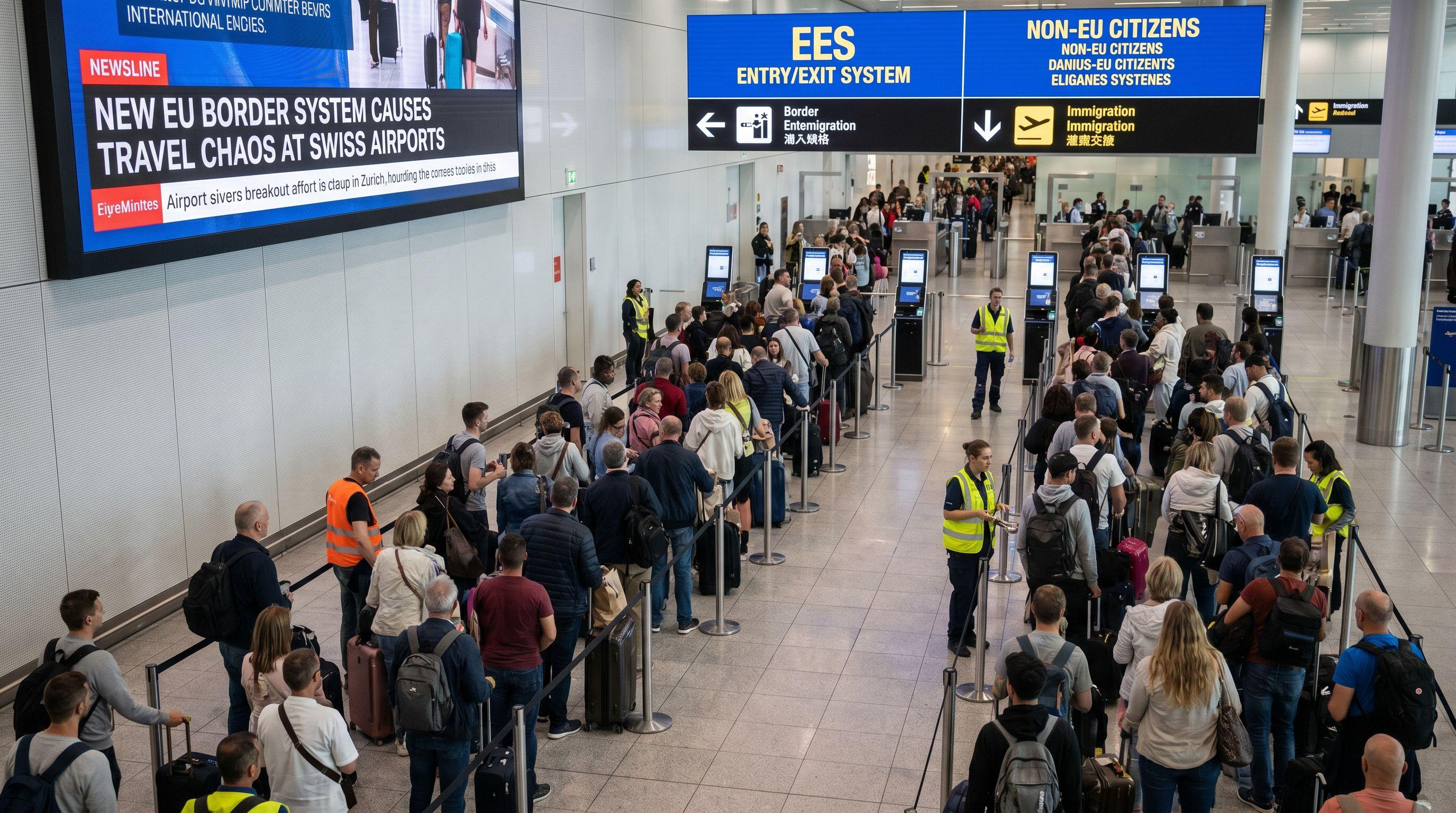
Swiss Gateways Grapple with Biometric Bottlenecks
Switzerland’s reputation for clockwork efficiency is facing its most severe test yet. The full implementation of the EU’s Entry/Exit System (EES) has transformed the arrivals halls of Zurich, Geneva, and Basel into zones of unprecedented frustration. As of April 2026, every non-Schengen traveler must now submit to a rigorous digital registration process, including facial scans and four-fingerprint captures. While the Federal Office of Customs and Border Security (BAZG) maintains the system is 'working well,' the reality on the ground tells a different story. Passengers are no longer merely passing through; they are being processed in a digital dragnet that adds minutes to every single interaction. This shift from manual passport stamps to a centralized EU-wide database was designed to bolster security, but it has instead triggered a cascade of delays that threaten to paralyze Swiss tourism during its most critical season. The efficiency that once defined the Swiss travel experience is being sacrificed at the altar of biometric compliance.
Data Points to a 41-Million-Traveler Exodus
A staggering 33 percent of travelers from the world’s most lucrative markets—the UK, US, Canada, and Australia—warn they will abandon European travel plans if border delays persist. The World Travel & Tourism Council (WTTC) has issued a chilling forecast: up to 41 million arrivals are currently at risk. For Switzerland, a nation where tourism contributes billions to the GDP, these figures represent a potential economic catastrophe. Britons, a staple of the Swiss ski and summer seasons, are the most sensitive to these delays, with 39 percent stating they would avoid the Schengen area if queues regularly exceed three hours. Despite 87 percent of travelers claiming they accept 'some disruption' for future smoothness, the current reality of two-hour waits is testing that patience to its breaking point. More than half of all travelers remain dangerously uninformed, with 55 percent reporting they have heard little to nothing about the EES requirements. This communication vacuum, paired with physical bottlenecks, creates a volatile environment for the Swiss hospitality sector.
Zurich and Geneva Confront the Two-Hour Wall
Wait times at Zurich Airport are now frequently surpassing the one-hour mark, while Geneva has seen 'interminable' queues lasting up to 150 minutes during peak periods. The chaos is not merely a matter of volume; it is a failure of infrastructure. Travelers like Pam Windsor, who recently navigated Zurich, describe a scene of total disorganization where even those who have previously registered biometrics are funneled back into the same stagnant lines. 'Please Zurich, sort it out,' is the rallying cry of exhausted passengers who find no clear route for pre-registered travelers. The problem intensifies when multiple long-haul flights from outside the Schengen zone land simultaneously, overwhelming the available kiosks. While Swiss residents with permits are exempt, the sheer mass of tourists and business travelers caught in the backlog creates a halo effect of congestion that impacts the entire airport ecosystem. The 'teething problems' described by officials are, in the eyes of the public, a systemic failure that Swiss authorities have yet to adequately address.
The High Price of Digital Security
Security comes at a cost, and Switzerland is currently paying it in reputation. While 57 percent of travelers acknowledge that the EES improves border security, that sentiment does little to alleviate the immediate stress of a missed connection or a ruined holiday start. The European Sea Ports Organisation (ESPO) has already called for 'operational flexibility'—essentially a suspension of checks—to prevent total gridlock, a move already seen at the Port of Dover. However, Swiss airports have yet to implement such emergency protocols. The challenge moving forward is a high-stakes balancing act: maintaining the integrity of the Schengen border while preventing the 'stress test' of summer from becoming a permanent deterrent. As the full rollout continues, the demand for pre-registration apps and increased staffing has never been more urgent. Switzerland must decide if it will lead the way in refining these digital borders or remain a bottleneck in the heart of Europe. The world is watching, and for millions of potential visitors, the decision to book their next Swiss adventure hangs in the balance of a biometric scanner.