Travel
Easter Gridlock: Gotthard Tunnel Traffic Jam Stretches Over 20 Kilometers
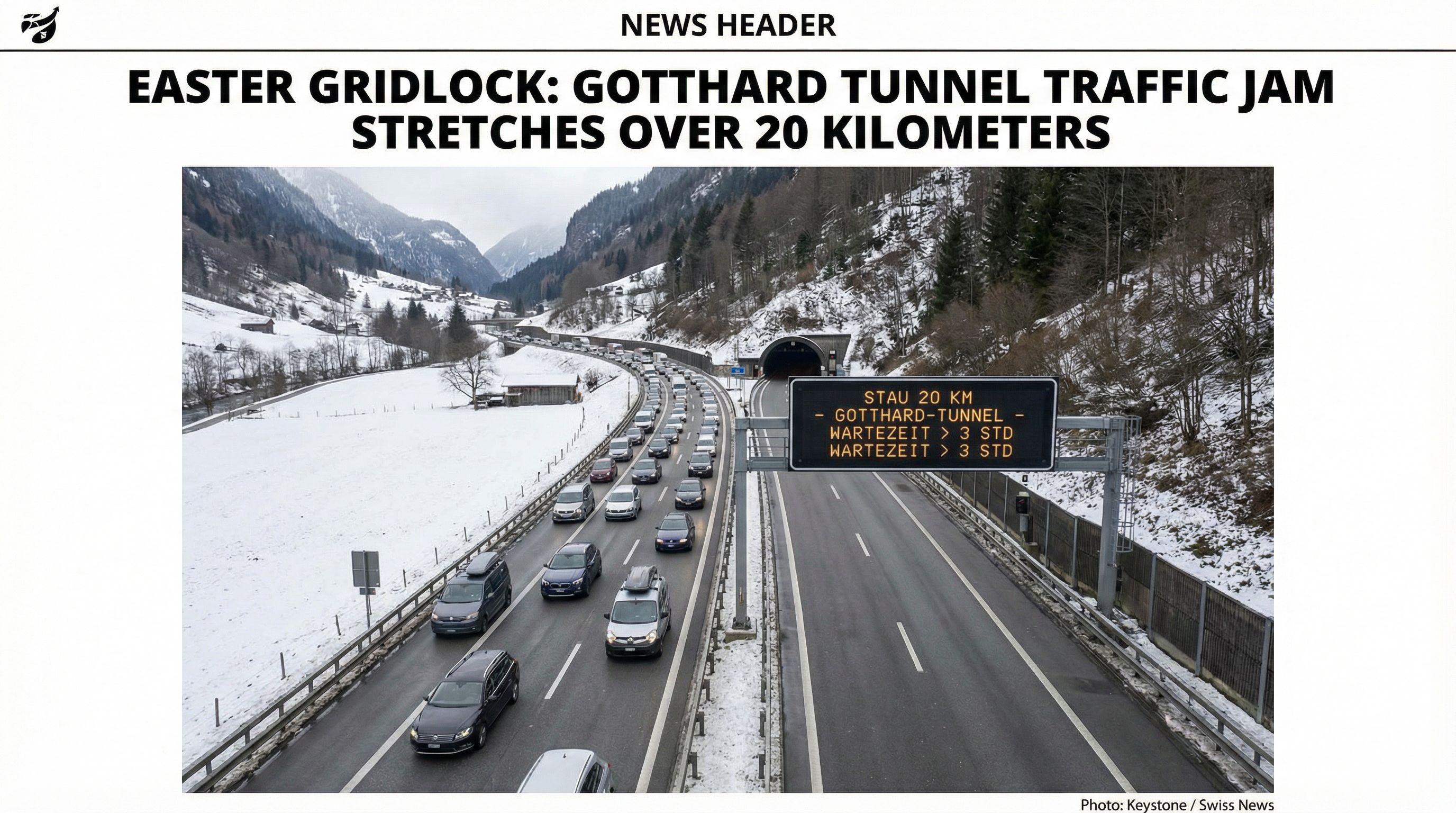
The Easter holiday travel period concluded with massive traffic jams at the Gotthard road tunnel, with waits of over three hours for both northbound and southbound travellers. The congestion, which peaked on Good Friday at 21 kilometers, highlights the perennial infrastructure challenge.
The Great Easter Paralysis
Switzerland ground to a halt this weekend as the annual Easter exodus transformed the A2 motorway into a sprawling, stationary parking lot. For thousands of travelers seeking the sun in Ticino and Italy, the dream of a quick getaway evaporated in the shadow of the Alps. This wasn't merely a delay; it was a systemic failure of movement at one of Europe's most vital transit points. The Gotthard Tunnel, the literal heart of Swiss north-south transit, became an impassable bottleneck as the sheer volume of holiday traffic overwhelmed the infrastructure's capacity. While the Swiss are no strangers to alpine queues, the intensity of this year's congestion signals a growing tension between our desire for mobility and the physical limits of our mountain passes. The scene at the north portal was one of quiet desperation, with engines idling for hours as the 'Blechlawine'—the avalanche of tin—refused to budge.
Gridlock Surges Beyond 20 Kilometers
A staggering 21 kilometers of stationary vehicles defined the peak of the crisis on Good Friday afternoon. This massive column of traffic between Erstfeld and Göschenen forced motorists to endure a grueling wait of three hours and 30 minutes just to reach the tunnel entrance. The numbers are sobering: the jam began building as early as Maundy Thursday, peaking at 15 kilometers by 2:20 PM that day. By Friday morning, the situation escalated rapidly, with the queue hitting 19 kilometers before 8:00 AM and eventually surpassing the 20-kilometer mark by midday. These figures represent more than just lost time; they represent a significant economic and environmental toll. When a 17-kilometer tunnel is preceded by a 21-kilometer queue, the efficiency of the entire European transit corridor is called into question. The Touring Club Switzerland (TCS) reported that even as the sun set on Friday, the relief was minimal, with thousands still trapped in the alpine corridor.
Alternative Arteries Struggle to Cope
Authorities desperately diverted traffic to the A13 San Bernardino route, yet the relief was marginal at best. As the Gotthard became choked, the A9 via the Simplon and the Great St Bernard pass were touted as the only viable escapes for those heading to Italy. Even the Lötschberg car transport service saw a surge in demand as savvy drivers attempted to bypass the A2 entirely. However, these alternatives are not designed to absorb the overflow of a paralyzed Gotthard. When the main artery fails, the secondary veins quickly reach their breaking point. The diversion of thousands of vehicles onto smaller mountain roads creates a ripple effect, impacting local communities and regional logistics. This year's gridlock proves that Switzerland’s 'Plan B' routes are increasingly insufficient when faced with the sheer scale of modern holiday migration. The reliance on the San Bernardino as a pressure valve is a temporary fix for a permanent structural challenge.
The Exhausting Return Migration
The nightmare repeated in reverse on Easter Monday as the 'Return Journey Jam' took hold of the south portal. By early afternoon, vehicles were backed up for 9 kilometers between Faido and Airolo, adding an extra 90 minutes to the journey for those heading north. While the return peak did not reach the 21-kilometer extreme of the southbound exodus, it remained a significant hurdle for families concluding their break. Simultaneously, a 7-kilometer tailback persisted at the north portal for late-comers heading south, creating a rare and frustrating 'double-sided' congestion event. This bidirectional pressure highlights the Gotthard's role as a bottleneck that never truly rests during the holiday season. The TCS utilized social media platforms like X to provide real-time updates, but for many, the information came too late to avoid the crawl. The return journey serves as a stark reminder that the Gotthard problem is not just about leaving home—it's about the difficulty of getting back.
Confronting Switzerland's Infrastructure Bottleneck
Switzerland now confronts a critical question: how much longer can the nation endure the 'Gotthard Gauntlet'? The 21-kilometer peak is not just a statistic; it is a symptom of an infrastructure that is fundamentally out of sync with modern demand. As the second tube of the Gotthard road tunnel remains under construction—a project not slated for completion until the end of the decade—travelers must brace for years of similar holiday paralysis. This recurring gridlock reignites the debate over road pricing, alpine protection, and the urgent need for more robust rail alternatives. While the Neat (New Railway Link through the Alps) provides a high-speed rail alternative, the cultural preference for car travel during holidays remains a formidable obstacle. Looking ahead, the Swiss people and policymakers must decide if the status quo of three-hour delays is an acceptable price for alpine transit, or if a more radical transformation of how we cross the Alps is overdue. One thing is certain: the Gotthard will remain the ultimate test of Swiss patience for the foreseeable future.