Economy
Cross-Border Shopping Surge Puts Ticino Retailers Under Pressure
Swiss retailers in Ticino are facing increased economic pressure as cross-border shopping in Italy has surged, with estimates reaching CHF 700 million annually, partly driven by a lower VAT refund threshold for shoppers.
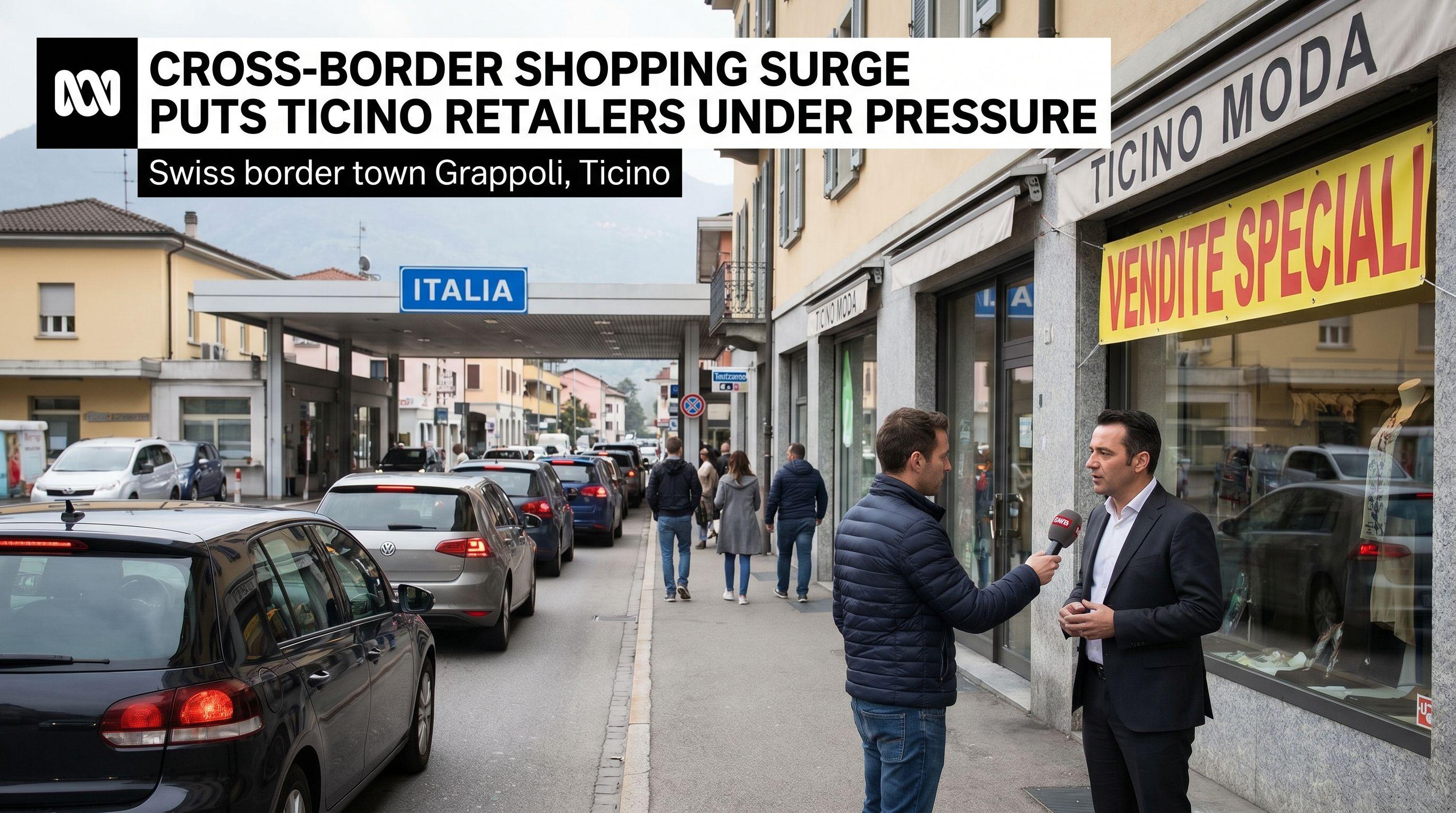
Ticino Retailers Confront a CHF 700 Million Exodus
A staggering CHF 700 million is hemorrhaging from the Ticino economy every year as residents flock across the border to Italian supermarkets. This figure represents a massive 40% surge from just five years ago, when the outflow stood at CHF 500 million. Local shops are no longer just competing with the store down the street; they are battling an entire international ecosystem designed to lure Swiss francs away. Enzo Lucibello, president of the Ticino Association of Large Retailers (Disti), confirms that Italian retailers have effectively become the primary providers for many Ticino households. The drain is not merely a trickle but a flood, threatening the very viability of the southern Swiss retail landscape. While the Swiss franc remains strong, its purchasing power is being weaponized against local businesses as consumers prioritize immediate savings over regional economic health. This shift is transforming the border from a simple geographic line into a financial vacuum, sucking the lifeblood out of local commerce.
The Como Effect: Tax Refunds Fuel the Surge
Swiss shoppers now dominate the Italian retail scene, accounting for a commanding 61% of all tax-free spending in border regions. The catalyst for this recent explosion was a drastic policy shift on February 1, 2024, when Italy slashed the minimum spending threshold for VAT refunds from €155 to a mere €70. The impact was immediate and dramatic: tax-free spending in Como soared by 6%, a growth rate double the Italian national average. For the Swiss consumer, the math is irresistible. One in two shoppers utilizes the tax-free scheme exclusively for everyday supermarket runs, turning routine grocery shopping into a high-yield financial maneuver. While luxury buyers from outside the EU still frequent the high-end boutiques, it is the Swiss middle class that is driving the volume in supermarkets. This 'Como Effect' creates a compounding advantage for Italian vendors—when a shopper crosses for milk and bread, they stay for the fuel and the dining, leaving Swiss businesses to grapple with the leftovers of a depleted consumer budget.
Policy Battles: The Fight Over Duty-Free Thresholds
Bern’s latest attempt to stem the tide is being dismissed by industry leaders as too little, too late. Starting in 2025, the Swiss government will halve the duty-free threshold for private imports from CHF 300 to CHF 150. However, Ticino’s retail giants argue this move lacks the teeth necessary to alter consumer behavior. The retailers’ association had lobbied aggressively for a much more aggressive reduction to CHF 50, arguing that the CHF 150 limit still allows for significant tax-free hauls that undercut local prices. 'Italy and Switzerland are playing in two different leagues,' warns Enzo Lucibello, highlighting the structural disadvantage Swiss businesses face. The frustration is palpable as retailers confront a trifecta of challenges: a punishing exchange rate, Italy’s strategic cuts to fuel excise duties, and a VAT refund system that rewards shoppers for leaving the country. Without more radical intervention, the border remains a one-way street for capital, leaving Swiss retailers to wonder if the federal government truly understands the existential threat facing the southern frontier.
Survival Tactics in a High-Price Island
Despite the grim statistics, Ticino is not surrendering without a fight. In a bid to reclaim lost ground, authorities have granted additional Sunday opening hours for smaller shops in tourist regions, a move that has successfully slowed the outflow in specific pockets. Yet, the broader trend remains stubbornly downward. The reality is that Switzerland remains a 'high-price island,' and the allure of the Italian 'full experience'—cheap groceries, discounted fuel, and affordable dining—is a powerful draw that Sunday openings alone cannot break. As the retail sector looks toward 2025, the focus is shifting toward digital loyalty and service-oriented experiences that cannot be easily replicated across the border. However, the fundamental price gap remains the elephant in the room. The future of Ticino’s retail landscape depends on whether local businesses can convince residents that the long-term cost of a hollowed-out local economy outweighs the short-term thrill of a cheaper grocery bill in Como. For now, the pressure is mounting, and the stakes have never been higher.