retail
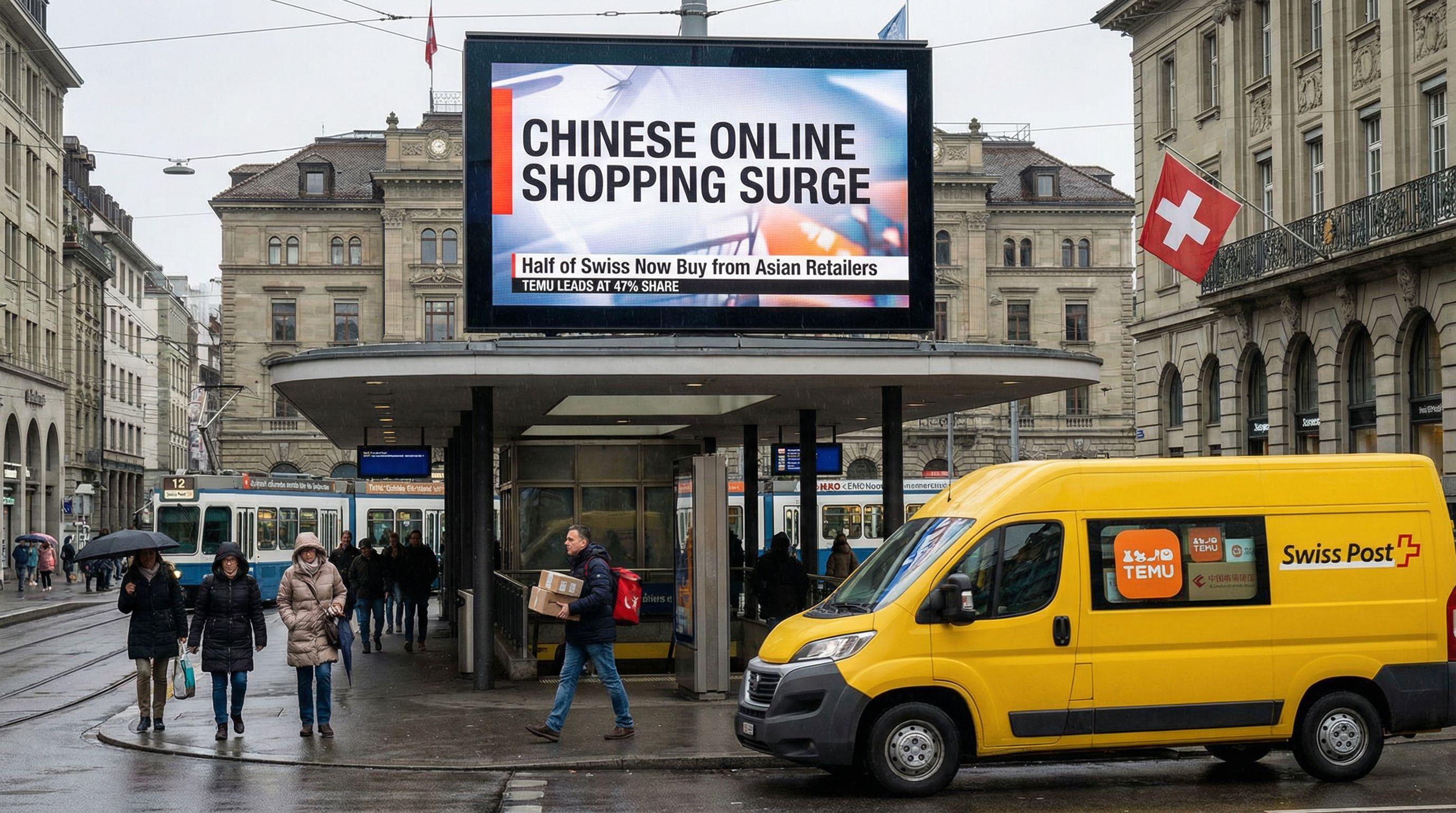
Chinese Online Shopping Surge: Half of Swiss Now Buy from Asian Retailers
Study reveals 52% of Swiss consumers made purchases from Chinese online retailers in 2024, with Temu leading at 47% market share.
The Chinese Retail Invasion
A staggering 52% of the Swiss population has now crossed the digital border to purchase directly from Chinese retailers. This isn't a niche trend; it is a fundamental shift in national consumption habits. The latest data from Comparis reveals that in 2024, the majority of Swiss consumers bypassed local options in favor of Asian giants. Leading this aggressive charge is Temu, which has captured a dominant 47% share of this market segment, leaving competitors like AliExpress (20%) and Shein (16%) trailing in its wake.
The speed of this takeover is unprecedented. Temu, a relative newcomer, has not only entered the market but has effectively conquered it. The platform's ubiquity is undeniable, penetrating households across every canton. This surge represents a critical turning point for the Swiss economy, signaling that consumer loyalty is rapidly shifting away from geographic proximity toward digital convenience and aggressive pricing. The message is clear: the era of Swiss retail isolation is over, and the floodgates of global e-commerce are wide open.
Price Wars: The Inflationary Driver
Price is the undisputed king in this retail revolution. An overwhelming 71% of respondents cited low cost as their primary motivation for shopping on Chinese platforms. In a country grappling with the high cost of living, Swiss consumers are voting with their wallets. Only a meager 12% indicated that product availability was the deciding factor, proving that this is not a search for unique items, but a hunt for bargains.
Comparis expert Michael Kuhn puts it bluntly: “Temu, Shein and co entice customers with bargains, special discounts and free products.” The strategy is ruthless and effective. By gamifying the shopping experience and offering prices that undercut domestic retailers by significant margins, these platforms have weaponized inflation against local competitors. Satisfaction rates remain alarmingly high for critics of the model, with 72% of buyers reporting they were either "satisfied" or "very satisfied." The stigma of "cheap quality" is fading, replaced by the thrill of the deal.
The Röstigraben of Retail
The data exposes a fascinating cultural divide across the Swiss landscape. While the German-speaking regions remain somewhat conservative with just under 50% participation, the Latin regions are embracing Chinese e-commerce with fervor. Ticino leads the nation with a massive 69% adoption rate, followed closely by French-speaking Switzerland at 58%. This digital Röstigraben suggests that cultural attitudes toward globalized consumption vary significantly across language borders.
Demographics further sharpen this picture. Economic necessity drives this trend, with 60% of individuals earning less than CHF 4,000 monthly turning to these platforms. In contrast, those earning over CHF 8,000 show a participation rate below 50%. However, the gender gap is surprisingly narrow, with women only slightly outpacing men. This is a phenomenon that transcends simple categorization, rooting itself deeply in the financial realities of the working class while simultaneously tempting the affluent with the convenience of a click.
Domestic Giants Under Siege
The most alarming statistic for local businesses is the frequency of orders. When asked where they shopped most often in the last 12 months, 18% of Swiss consumers named Temu—surpassing domestic champion Digitec Galaxus (17%) and European heavyweight Zalando (15%). This is a direct assault on the daily habits of Swiss shoppers. The Chinese low-cost shops are no longer fringe alternatives; they are becoming the default option for frequent, low-value purchases.
However, the fortress of Swiss retail has not yet fallen. Kuhn notes a critical distinction: "The frequency of orders has nothing to do with the order value." While consumers flock to Temu for cheap gadgets and apparel, high-value electronics and luxury goods remain the domain of trusted Swiss providers. Domestic retailers are now forced to confront a bifurcated market: they retain the premium segment but are rapidly losing the battle for everyday volume. To survive, Swiss platforms must leverage trust and quality, as they can no longer compete on price alone.