AI
Written with AI assistance•10. September 2025•
Chinese tech giant Baidu selects Switzerland as its first European market for autonomous taxi services, marking a significant milestone in Swiss transportation innovation.
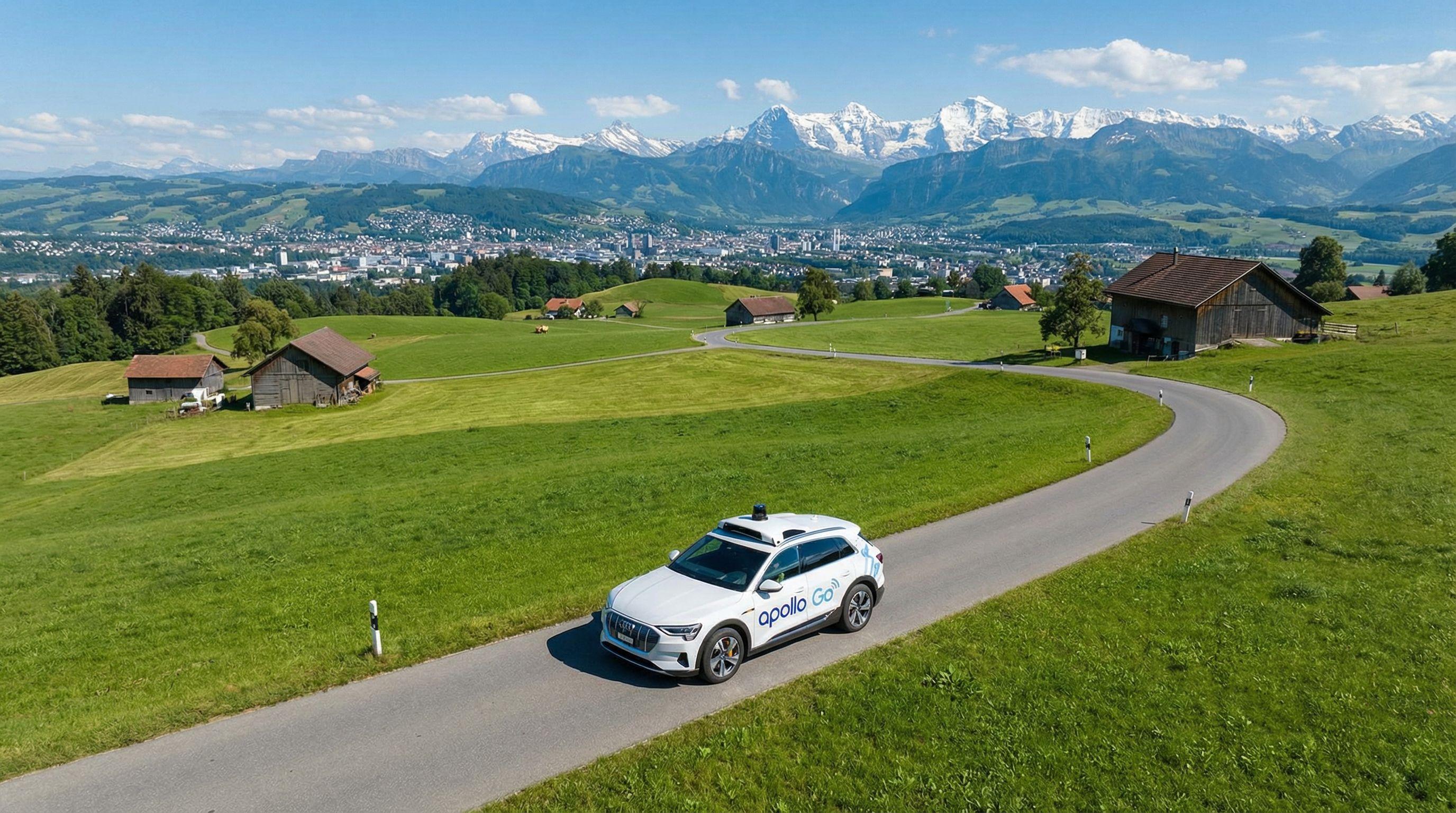
"Progress in Europe has been relatively slow, however, that may be about to change."
Switzerland has secured a massive victory in the global race for autonomous mobility. In a decisive move that underscores the nation's status as a premier innovation hub, Chinese tech titan Baidu has selected Switzerland as the launchpad for its European expansion. While the rest of the continent grapples with regulatory hesitation, Zurich has aggressively positioned itself at the forefront of this transportation revolution.
In July 2025, Baidu—often hailed as the 'Google of China'—confirmed its ambitions, establishing a European hub in Zurich and formally registering a Swiss entity by mid-year. This is not merely a corporate filing; it is a declaration of intent. The Canton of Zurich has lauded the move, recognizing it as a critical boost to the region's reputation. By choosing Swiss soil over other European contenders, Baidu is betting that Switzerland’s stable economy and advanced infrastructure provide the perfect laboratory for its cutting-edge Apollo Go service. The implications are profound: Switzerland is no longer just watching the autonomous future unfold; it is driving it.
The numbers behind Baidu’s operation are nothing short of colossal. While European competitors are still in the experimental phase, Apollo Go is already a dominant force in the global market. In the final quarter of 2024 alone, the service delivered a staggering 1.1 million rides across China, cementing its status as the world's largest autonomous ride-hailing provider.
Currently operating in over ten major Chinese metropolises—including Beijing, Shanghai, and Shenzhen—the platform has amassed a wealth of data that dwarfs local European initiatives. This is not a startup finding its footing; this is a seasoned veteran bringing industrial-scale efficiency to Swiss roads. The economic argument is equally compelling. Unlike conventional taxis, which must account for the driver's wage, robotaxis promise to slash operational costs dramatically. By removing the human element, Baidu intends to revolutionize the economics of personal transport, challenging the very necessity of private car ownership. As Apollo Go prepares to unleash this proven technology in Switzerland, local providers must brace for a seismic shift in market dynamics.
Forget the gridlocked chaos of Zurich’s Bahnhofstrasse; Baidu is playing a smarter game. Rather than tangling with the complex pedestrian traffic of the city center immediately, Apollo Go is strategically targeting the periphery. The service will focus on rural and suburban zones where public transport remains patchy and inefficient. This calculated approach allows the company to solve a genuine pain point for Swiss commuters while navigating safer, less congested routes.
Rumors have swirled regarding a potential alliance with PostAuto, the bus subsidiary of Swiss Post, to bridge the 'last mile' gap. However, while reports suggest synergy, PostAuto has firmly denied any binding agreement as of now. Nevertheless, the strategy is clear: Baidu intends to complement, not just compete with, existing Swiss infrastructure. By filling the voids in the transit network, they aim to make autonomous travel an indispensable utility for those living outside the urban core. If successful, this model could redefine rural connectivity across the entire Alpine region.
The clock is ticking, and the race is heating up. Baidu has set an aggressive timeline, with trials slated to begin before the end of 2025 and a full commercial rollout targeted for 2026. Initially, these vehicles will operate with safety drivers—a conservative start designed to build public trust and satisfy rigorous Swiss safety standards. But make no mistake: the training wheels will not stay on for long.
Baidu is not the only predator circling the market. Competitors like WeRide are already piloting vehicles at Zurich Airport, while Pony.ai has signaled strong interest in the region. To outmaneuver these rivals, Baidu is leveraging global partnerships, including a strategic deal with Uber to explore international markets. Switzerland has effectively become the testing ground for a high-stakes clash of Asian tech giants. If Apollo Go can successfully navigate the complex Swiss regulatory terrain and the literal twists of Alpine roads, it will likely secure a monopoly on the blueprint for European robotaxi adoption. The future of transport is arriving, and it speaks Chinese.